


Dr. Yi Ge, MED-EL
Published Jun 01, 2026
Conductive vs Sensorineural Hearing Loss: What’s the Difference?
The main difference between conductive and sensorineural hearing loss is where the problem occurs in the ear. Conductive hearing loss happens in the outer or middle ear, preventing sound from reaching the inner ear. Sensorineural hearing loss occurs in the inner ear or auditory nerve, reducing the ear’s ability to convert sound into nerve signals or send them to the brain.

Understanding this difference matters because it directly influences how hearing loss is diagnosed and what treatment options may help.
Key Takeaways
-
Conductive hearing loss is caused by issues in the outer or middle ear (such as blockage or fluid) and mainly leads to reduced loudness, while speech clarity is usually preserved and often treatable.
-
Sensorineural hearing loss results from damage to the inner ear or auditory nerve and can cause reduced sensitivity to sound, speech distortion, or difficulty hearing certain frequencies.
-
Unlike conductive hearing loss, sensorineural hearing loss is typically permanent.
-
The symptoms and impact differ depending on the type of hearing loss, affecting how sound is perceived and understood.
-
A hearing test is the essential next step to accurately diagnose the type and severity of hearing loss.
Conductive vs Sensorineural Hearing Loss at a Glance
To better understand the difference between conductive and sensorineural hearing loss, here’s a side-by-side comparison.
| Conductive Hearing Loss | Sensorineural Hearing Loss | |
| Location | Outer or middle ear | Inner ear or auditory nerve |
| Cause | Blockage or fluid etc. mechanical issue | Damage to hair cells or auditory nerve |
| Common causes | Earwax, infections, fluid, foreign objects | Aging, noise exposure, genetics, illness, ototoxic medications |
| What it may sound like | Muffled, quiet, blocked | Quieter speech/missing frequencies |
| Permanent or temporary | Often temporary, depends on cause | Usually permanent |
| Typical treatment options | Medical treatment, minor surgery, bone conduction device | Hearing aids, cochlear implants |
In short, conductive hearing loss affects sound transmission, while sensorineural hearing loss affects sound transduction (the converting sound vibrations into electrical neural signals) and neural signal transmission.
Sometimes, both types occur together. This is called mixed hearing loss. This is not uncommon, especially in older adults or people with long-term ear conditions. It matters because treatment often needs to address both the mechanical and neuron/nerve-related components of hearing loss.
What Is Conductive Hearing Loss?
Let’s take a closer look at each type, starting with conductive hearing loss.
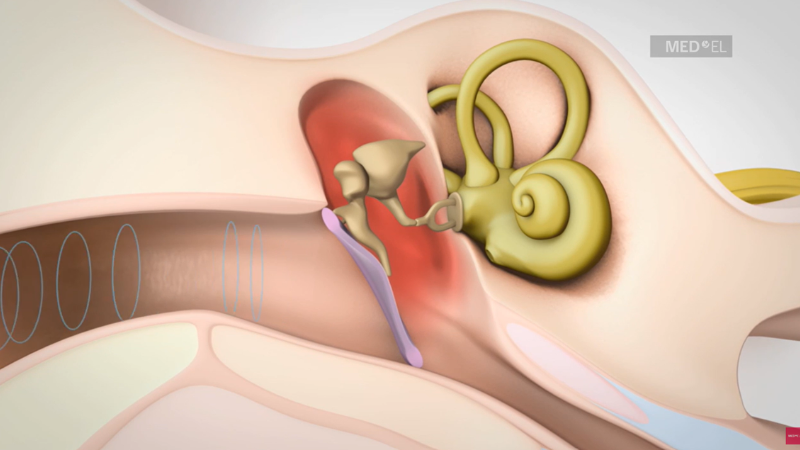
Conductive hearing loss happens when sound cannot move efficiently through the outer or middle ear to reach the inner ear.
Common Causes
- Earwax buildup in the ear canal
- Ear infections
- Fluid in the middle ear
- Foreign objects in the ear canal
- Problems with the eardrum or middle ear bones
What It May Sound Like
People often describe it as sound being muffled or blocked, hearing as if your ears are plugged underwater, or everything seeming quieter than normal but not necessarily distorted.
Is Conductive Hearing Loss Permanent?
It depends on the cause.
- In many cases, it is temporary and treatable, such as when caused by earwax or infections.
- In some cases, it may persist if related to structural issues in the ear, like malformations or ossification. While conventional hearing aids may provide benefit in mild cases, their effectiveness can be limited in more significant conductive hearing loss or may not be suitable due to medical reasons. In such cases, bone conduction devices, bone conduction implants, or middle ear implants may be more appropriate solutions.

Bone Conduction Systems
Discover Bone Conduction Hearing Aids
Bone Conduction Implants
Discover Bone Conduction ImplantsWhat Is Sensorineural Hearing Loss?
Now let’s look at sensorineural hearing loss.
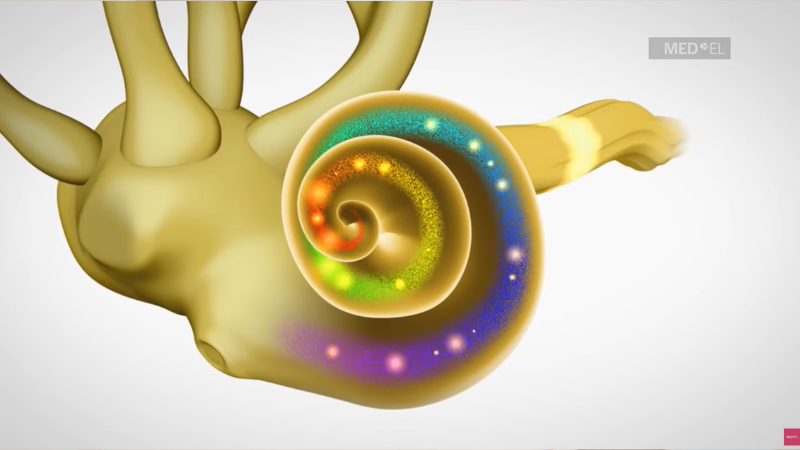
Sensorineural hearing loss occurs when there is damage to the inner ear (cochlea) or the auditory nerve, which converts the sound vibrations into neural signals and sends them to the brain.
Common Causes
- Aging (age-related hearing loss)
- Exposure to loud noise
- Illness, medication, or injury affecting the inner ear
- Genetic factors
What It May Sound Like
This type of hearing loss often affects both loudness and clarity , with speech sounding quieter, distorted or unclear and certain frequencies may be harder to hear. For example, you might hear someone speaking in a restaurant but have trouble understanding what they’re saying, especially with background noise. Conversations in groups or on the phone may also become more difficult.
Is Sensorineural Hearing Loss Permanent?
In most cases, yes. Damage to the inner ear’s hair cells or the auditory nerve is typically not reversible.
Treatment Options
While it cannot usually be cured, it can often be managed with:
- Hearing aids
- Middle ear implants
- Cochlear implants (for more severe cases)

Cochlear Implants
Discover Cochlear ImplantsHow Do You Know Which Type of Hearing Loss You Have?
You will likely notice symptoms, but you can’t reliably tell the type of hearing loss on your own.
A qualified professional will typically use:
- An ear examination to check for blockages or infections
- A hearing test (audiometry) to measure how well you hear different sounds and to generate an audiogram to visualize your hearing levels
You can even start with an online hearing test as a first step.
Free Online Hearing Test
To find out whether you have hearing loss, try our free online hearing test. It can provide you with a quick assessment of how well you can hear and understand in everyday life.
Take Our Online Hearing TestWhy Professional Testing Matters
Symptoms can overlap. For example:
- Both types can cause difficulty hearing conversations
- Both types can affect one or both ears
Only proper testing can determine whether you have conductive hearing loss, sensorineural hearing loss, or mixed hearing loss.
Important: Sudden hearing changes should always be checked as soon as possible to ensure timely treatment.
Treatment Options and Next Steps
Once the type of hearing loss is identified, treatment depends on both the cause and severity.
Conductive Hearing Loss Treatment
May include:
- Treatment with medication (e.g., for infections)
- Removal of earwax or foreign objects
- Surgical procedures
If hearing loss persists, hearing aids, bone conduction implants, or middle ear implants can be a solution.
Sensorineural Hearing Loss Treatment
Often involves long-term management:
- Hearing aids to amplify sound, can be used for mild to severe hearing loss depending on benefit
- Middle ear implants for moderate to severe hearing loss, particularly when hearing aids are not suitable or effective
- Cochlear implant systems for severe hearing loss, especially when hearing aids provide limited benefit
Bone Conduction Systems
Discover Bone Conduction Hearing Aids
Bone Conduction Implants
Discover Bone Conduction Implants
Cochlear Implants
Discover Cochlear ImplantsIf you’re experiencing hearing difficulties, don’t wait. Get your hearing checked as soon as possible. Taking action early can make a significant difference in your hearing health and quality of life. If you’re unsure about your hearing, a professional evaluation is always the best place to start.
Ready to Take the Next Step?
If you have questions about the causes of hearing loss or treatment options, the MED-EL team is here to help.
Get In TouchReferences


Dr. Yi Ge
Dr. Yi Ge is a certified otolaryngologist. Since joining MED-EL in 2003, she has held various roles across clinical, regulatory, and medical affairs. Currently, Dr. Ge serves as the Senior Manager of Medical Affairs at MED-EL Innsbruck. Her work focuses on medical process assessment in support of product development and risk management. With deep knowledge of hearing implant systems and global regulatory requirements, Dr. Ge fosters patient-centered innovation in hearing healthcare.
MED-EL



Was this article helpful?
Thanks for your feedback.
Sign up for newsletter below for more.
Thanks for your feedback.
Please leave your message below.
Thanks for your message. We will reply as soon as possible.
Send us a message
Field is required
John Doe
Field is required
name@mail.com
Field is required
What do you think?
© MED-EL Medical Electronics. All rights reserved. The content on this website is for general informational purposes only and should not be taken as medical advice. Contact your doctor or hearing specialist to learn what type of hearing solution suits your specific needs. Not all products, features, or indications are approved in all countries.
Dave Wharton
June 03, 2026
I have a Medel Adhear hearing aid. For seniors there is difficulty attaching the appliance and the adjustments are tiny and difficult to use, particularly for older people. A separate remote is crucial and I don't mean a mobile phone. I have tried very hard to convince Medel of these issues. I understand that Medel is in the process of updating their current appliance. I hope that they focus on clarity and ease of operation (smaller, bluetooth, mobile phone, looks etc. are all OK but they are not a priority). Medel knows how to produce bone conduction hearing aids. Some fine tuning is required. I currently don't wear my hearing aid and many others are not happy with the clarity. Some say that they can hear people but cannot decipher what they are saying.
MED-EL
June 05, 2026
Hi Dave, thanks a lot for reaching out and for sharing your feedback with us. We have forwarded it to our product experts for future improvements. Kind regards, Gordana
Dr. Yi Ge
Dr. Yi Ge is a certified otolaryngologist. Since joining MED-EL in 2003, she has held various roles across clinical, regulatory, and medical affairs. Currently, Dr. Ge serves as the Senior Manager of Medical Affairs at MED-EL Innsbruck. Her work focuses on medical process assessment in support of product development and risk management. With deep knowledge of hearing implant systems and global regulatory requirements, Dr. Ge fosters patient-centered innovation in hearing healthcare.
MED-EL
Dr. Yi Ge
Dr. Yi Ge is a certified otolaryngologist. Since joining MED-EL in 2003, she has held various roles across clinical, regulatory, and medical affairs. Currently, Dr. Ge serves as the Senior Manager of Medical Affairs at MED-EL Innsbruck. Her work focuses on medical process assessment in support of product development and risk management. With deep knowledge of hearing implant systems and global regulatory requirements, Dr. Ge fosters patient-centered innovation in hearing healthcare.
MED-EL
Conversation
1 Comment