



And you can't even see it.
Discover TICI English

Dr. Yi Ge, MED-EL
Published Jun 17, 2026
Infant hearing loss means that a baby cannot hear sounds as expected, either in one or both ears, from birth or early infancy. In everyday life, common signs include a baby not responding to voices, missing sounds, or not developing speech and language skills at the expected pace.

If you’re a parent or caregiver worried about your baby’s hearing, this article will guide you through the early signs, common causes, newborn screening results, unilateral hearing loss, and treatment options so you know what to watch out for and what to do next.
Infant hearing loss is a condition where a baby has reduced ability or no ability to hear sounds. It may affect one ear (unilateral) or both ears (bilateral), and it can be temporary or permanent.
Hearing plays a key role in speech and language development, so identifying hearing issues early is essential for helping children communicate and learn effectively.
| Cause | Treatment | |
| Temporary Hearing Loss | Often caused by fluid in the middle ear, ear infections or obstruction in the canal | May resolve with medical treatment |
| Permanent Hearing Loss | Caused by inner ear damage or auditory nerve issues | Requires long-term support and management |
A proper diagnosis by a specialist is the only way to determine the type.
Recognizing the early signs of hearing loss in infants is crucial. These signs often relate to developmental milestones, and they can vary depending on age.
If something doesn’t feel right about your child’s hearing, trust your parental instinct.
These may also appear later as signs of deafness in toddlers, especially if hearing loss develops over time.
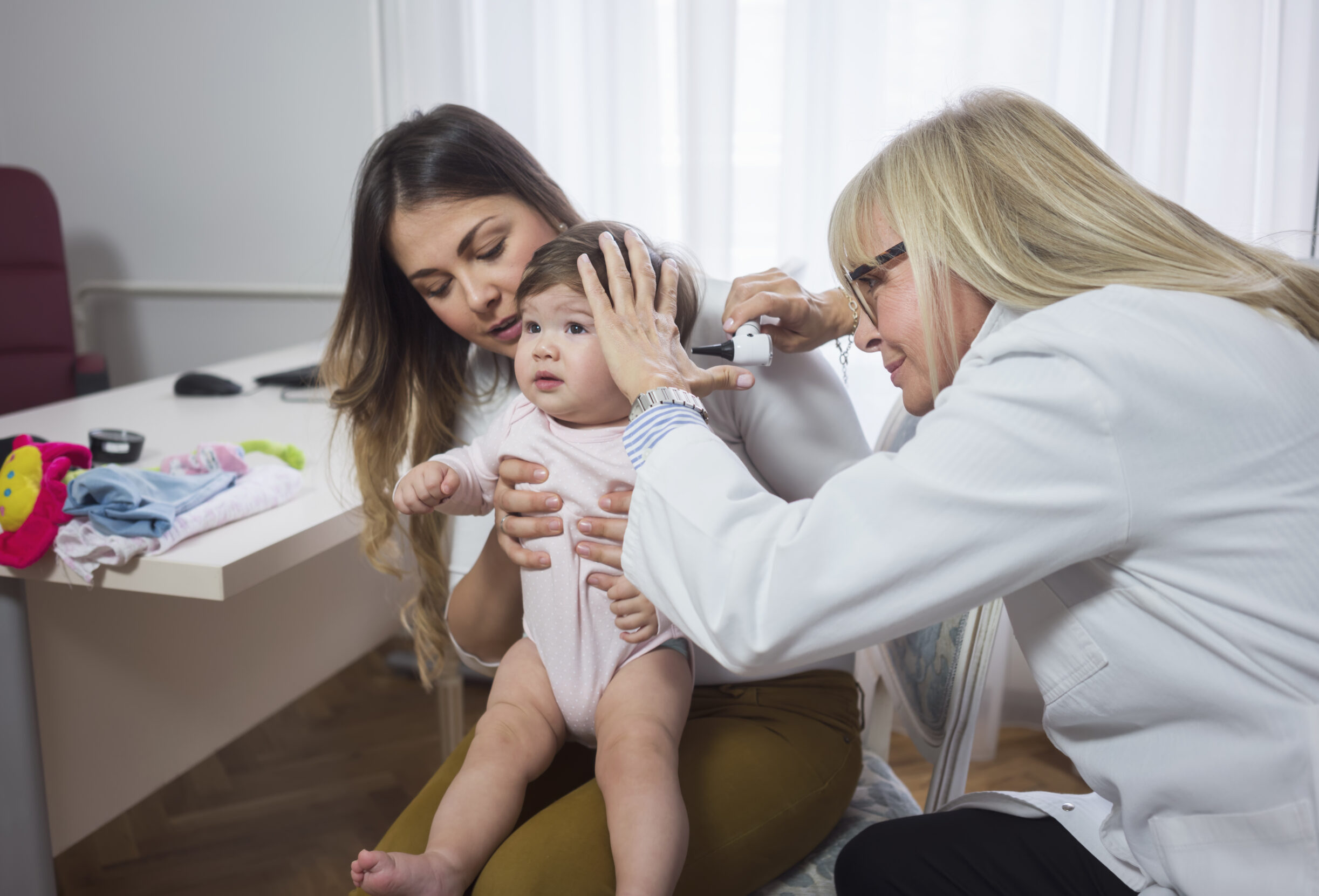
The most common causes of deafness at birth include genetic factors, infections during pregnancy, or complications around the time of birth.
In general, hearing loss in babies may result from one or more of the following:
Many cases of infant hearing loss are inherited, even when there is no known family history of hearing problems.
Certain infections during pregnancy—such as congenital CMV (cytomegalovirus), rubella, herpes, or toxoplasmosis—can affect the development of the inner ear or hearing nerve and may lead to permanent or progressive hearing loss.
Babies born early or with a very low birth weight may have a higher risk of hearing loss, especially if they need intensive medical care after birth.
Some babies treated in the neonatal intensive care unit (NICU) may experience hearing loss due to complications such as oxygen deprivation, severe infections, or medications that can affect hearing.
Severe jaundice or reduced oxygen levels during delivery can sometimes damage parts of the auditory system involved in hearing.
Some babies are born with differences in the outer, middle, or inner ear that affect how sound travels to the brain.
In some cases, exposure to ototoxic medications – either taken during pregnance or administered to the infant after birth – can affect hearing.
Fluid in the middle ear or repeated ear infections can sometimes cause temporary hearing difficulties, especially in young children.
In some cases, doctors may not be able to identify an exact cause. Regardless of the reason, early diagnosis and support are essential to support the development of speech, language and communication skills.
Most babies receive a newborn hearing screening shortly after birth, before hospital discharge or within the first month of life. This is a quick and painless way to check for hearing loss in newborns.
Two common tests are:
Results are usually:

Yes. A baby can pass a newborn hearing screening and still develop hearing loss later. This is called delayed-onset or progressive hearing loss.
A passed screening means no hearing concerns were found at the time of testing, but it does not rule out hearing changes later in infancy or childhood.
This is why it’s important to:
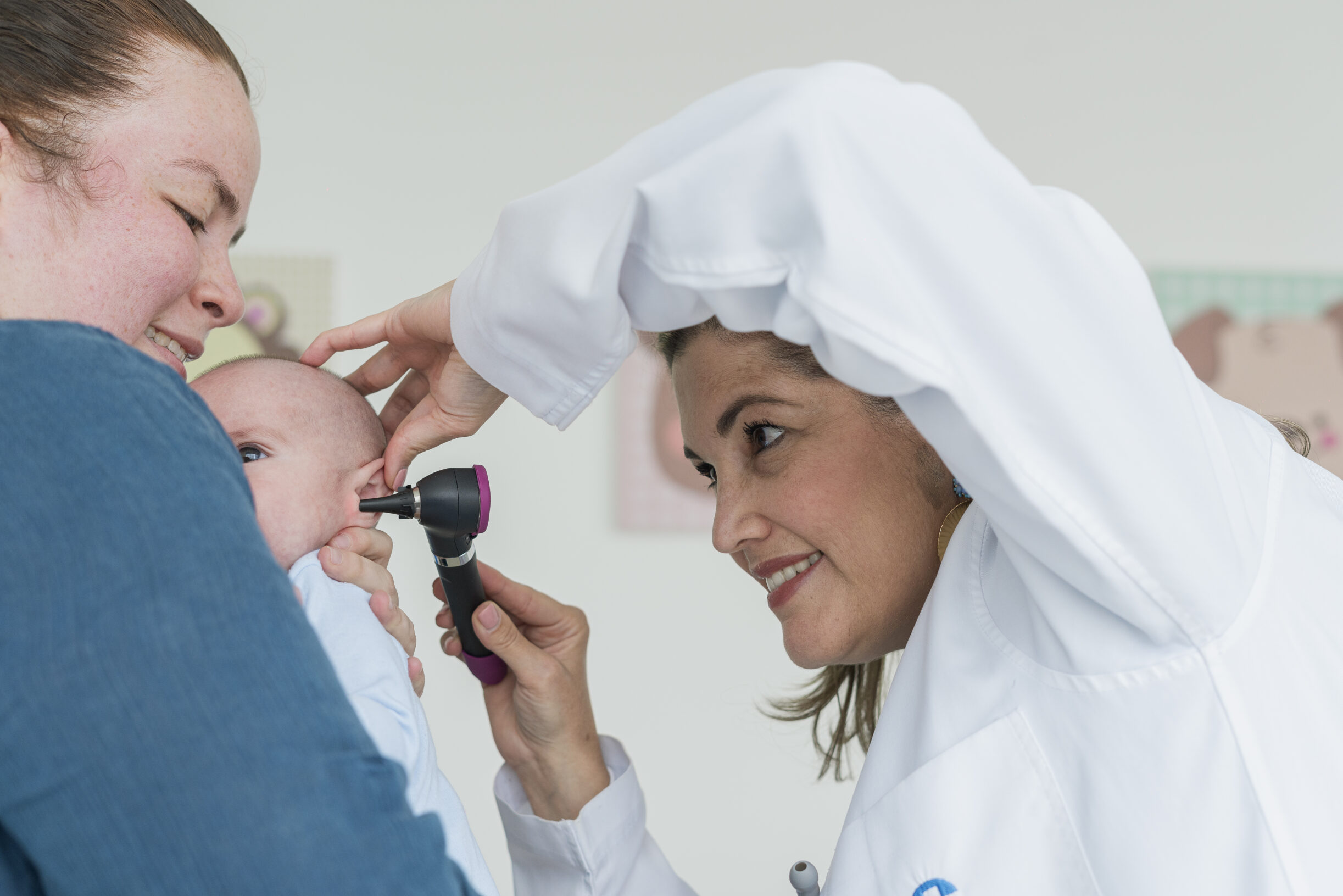
If your baby does not pass a hearing test, it does not necessarily mean they have permanent hearing loss. Many babies do not pass the first screening because of temporary factors, such as fluid in the ear or movement during the test. However, follow-up testing is essential, and early action helps ensure timely diagnosis and support if hearing loss is confirmed.
A helpful timeline to remember is the 1-3-6 rule:
Following this timeline helps make sure babies with hearing loss receive support as early as possible during a critical stage of speech and language development.
Cochlear implants can be a solution for children with hearing loss.
Learn MoreInfant hearing loss in one ear, also called unilateral hearing loss, means a baby can hear in one ear but not the other.
Even though one ear works, this condition can still affect:
Early in life, the brain relies on input from both ears to develop balanced auditory pathways. When hearing is reduced in one ear, this may influence how the brain processes sound over time.
A baby deaf in one ear may still benefit from early support and monitoring.
Treatment depends on the cause, type, and severity of hearing loss.
Possible options include:
Some hearing problems caused by fluid buildup or ear infections may improve with medication or medical procedures.
Speech, language, and listening support can help babies build communication skills during critical stages of development.
Audiologists, ENT specialists, and early intervention professionals can help families understand hearing test results and choose the right care plan.
Hearing aids can help babies with mild to moderate hearing loss access sounds and speech more clearly.
For babies and children with severe to profound hearing loss, cochlear implants may help provide access to sound when hearing aids are not enough.

The most important factor is early action, which can significantly improve communication and developmental outcomes.
If you are concerned about your baby’s hearing:
Infant hearing loss can feel overwhelming, but with early diagnosis, expert guidance, and the right support, children can develop strong communication skills and thrive.
Want to find out if your child might have hearing loss? Learn about the signs to look for and the next steps to get their hearing checked.
Get in TouchEarly signs can include not startling at loud sounds, not turning toward voices, not responding to their name, delayed babbling, or delayed speech development. Signs can vary by age, so it is important to watch hearing and communication milestones over time.
A “refer” result means your baby needs follow-up testing. It does not always mean permanent hearing loss, but it is important to schedule the next evaluation promptly so doctors can better understand your baby’s hearing needs.
Yes. A baby can pass a newborn hearing screening and still develop hearing loss later. This is called delayed-onset or progressive hearing loss, which is why parents should continue monitoring hearing, speech, and language milestones as their child grows.
Hearing loss in babies can be caused by genetics, infections during pregnancy, prematurity, NICU-related factors, jaundice, structural differences in the ear, or temporary conditions such as fluid or ear infections. In some cases, the exact cause is not known.
Treatment depends on the cause and severity of the hearing loss. Options may include medical treatment, hearing aids, cochlear implants when appropriate, speech and language support, and follow-up care with hearing specialists. Early intervention can help support communication and language development.
References


Dr. Yi Ge
Dr. Yi Ge is a certified otolaryngologist. Since joining MED-EL in 2003, she has held various roles across clinical, regulatory, and medical affairs. Currently, Dr. Ge serves as the Senior Manager of Medical Affairs at MED-EL Innsbruck. Her work focuses on medical process assessment in support of product development and risk management. With deep knowledge of hearing implant systems and global regulatory requirements, Dr. Ge fosters patient-centered innovation in hearing healthcare.
MED-EL
Was this article helpful?
Thanks for your feedback.
Sign up for newsletter below for more.
Thanks for your feedback.
Please leave your message below.
Thanks for your message. We will reply as soon as possible.
Send us a message
Field is required
John Doe
Field is required
name@mail.com
Field is required
What do you think?
© MED-EL Medical Electronics. All rights reserved. The content on this website is for general informational purposes only and should not be taken as medical advice. Contact your doctor or hearing specialist to learn what type of hearing solution suits your specific needs. Not all products, features, or indications are approved in all countries.
Leonardo
July 09, 2026
Buongiorno mi sono operato 2024 x impianto cocleare sono soddisfatto
Jairus
July 15, 2026
I lost my ear in the moment I'm using old cochlear
MED-EL
July 16, 2026
Hi Jairus, thanks a lot for reaching out. If you'd like to learn which hearing solution might be the right one for you, please get in touch with your local MED-EL team via this link: https://www.medel.com/contact-med-el Kind regards, Gordana
Dr. Yi Ge
Dr. Yi Ge is a certified otolaryngologist. Since joining MED-EL in 2003, she has held various roles across clinical, regulatory, and medical affairs. Currently, Dr. Ge serves as the Senior Manager of Medical Affairs at MED-EL Innsbruck. Her work focuses on medical process assessment in support of product development and risk management. With deep knowledge of hearing implant systems and global regulatory requirements, Dr. Ge fosters patient-centered innovation in hearing healthcare.
MED-EL
Dr. Yi Ge
Dr. Yi Ge is a certified otolaryngologist. Since joining MED-EL in 2003, she has held various roles across clinical, regulatory, and medical affairs. Currently, Dr. Ge serves as the Senior Manager of Medical Affairs at MED-EL Innsbruck. Her work focuses on medical process assessment in support of product development and risk management. With deep knowledge of hearing implant systems and global regulatory requirements, Dr. Ge fosters patient-centered innovation in hearing healthcare.
MED-EL
Want to make sure you get all the latest articles from the MED-EL Blog? Subscribe now!
Registration was successful
We’re the world’s leading hearing implant company, on a mission to help people with hearing loss experience the joy of sound.
Find your local MED-EL team
© MED-EL Medical Electronics. All rights reserved. The content on this website is for general informational purposes only and should not be taken as medical advice. Contact your doctor or hearing specialist to learn what type of hearing solution suits your specific needs. Not all products, features, or indications are approved in all countries.


Conversation
2 Comments