
And you can't even see it.
Discover TICI English

Dr. Yi Ge, MED-EL
Published Apr 22, 2026
Noticing the signs of hearing loss in children early can make a world of difference. Kids learn language, social skills, and confidence by listening to the people around them. When hearing is reduced, those developmental building blocks can get wobbly. The tricky part is that hearing loss in children isn’t always obvious.

The good news is that when hearing loss is identified and treated early, children can develop strong speech, language, and communication skills. This article gives you a simple, age-based guide about the most important signs, when to get a hearing test, and what solutions can help children hear clearly.
There are several types of hearing loss, and the causes can be temporary or permanent. Some of the most common include:
Fluid in the middle-ear—often caused by colds, ear infections or bottle-feeding while lying down—can muffle sound. This is one of the most frequent causes of hearing loss in young kids and may come and go.
Some children inherit hearing loss, even if no one in the family had childhood symptoms.
Infections before or after birth, like CMV (cytomegalovirus), Rubella, Toxoplasmosis, Syphilis, Zika virus, meningitis, Measles or Mumps, as well as some medicines (e.g. aminoglycosides) can affect hearing.
The following factors may increase risk for early hearing loss, such as prematurity, low birth weight, NICU stay > 5 days, neonatal jaundice, low Apgar score (0-4 at 1 minute or 0-6 at 5 minutes).
Loud music, fireworks, and other intense sounds can damage hearing over time.
Hearing loss can appear at any age, so even if your child passed a newborn screening, it’s still important to watch for changes.
Head trauma and ANSD (auditory neuropathy spectrum disorder) can also cause hearing loss in children. And in many children, the precise cause isn’t found even after testing—this is common and still manageable with early intervention.
Some signs of childhood hearing loss are universal and can show up in infants, toddlers, and older children. Keep an eye out for patterns such as:
If several of these signs are familiar, it’s a good idea to schedule a hearing test. Even mild hearing loss can make it difficult for children to learn new words, follow instructions, and communicate confidently.

Babies explore the world through sound. When hearing is reduced, the first signs are often related to how they react—or don’t react—to everyday noises.
For 0-6 month-olds:
Common signs of hearing loss in infants from 0 to 6 months include:
For 6-12 month-olds:
These may be signs of deafness in babies, but these symptoms can also be caused by fluid in the middle ear or other temporary conditions. Either way, it’s worth checking.
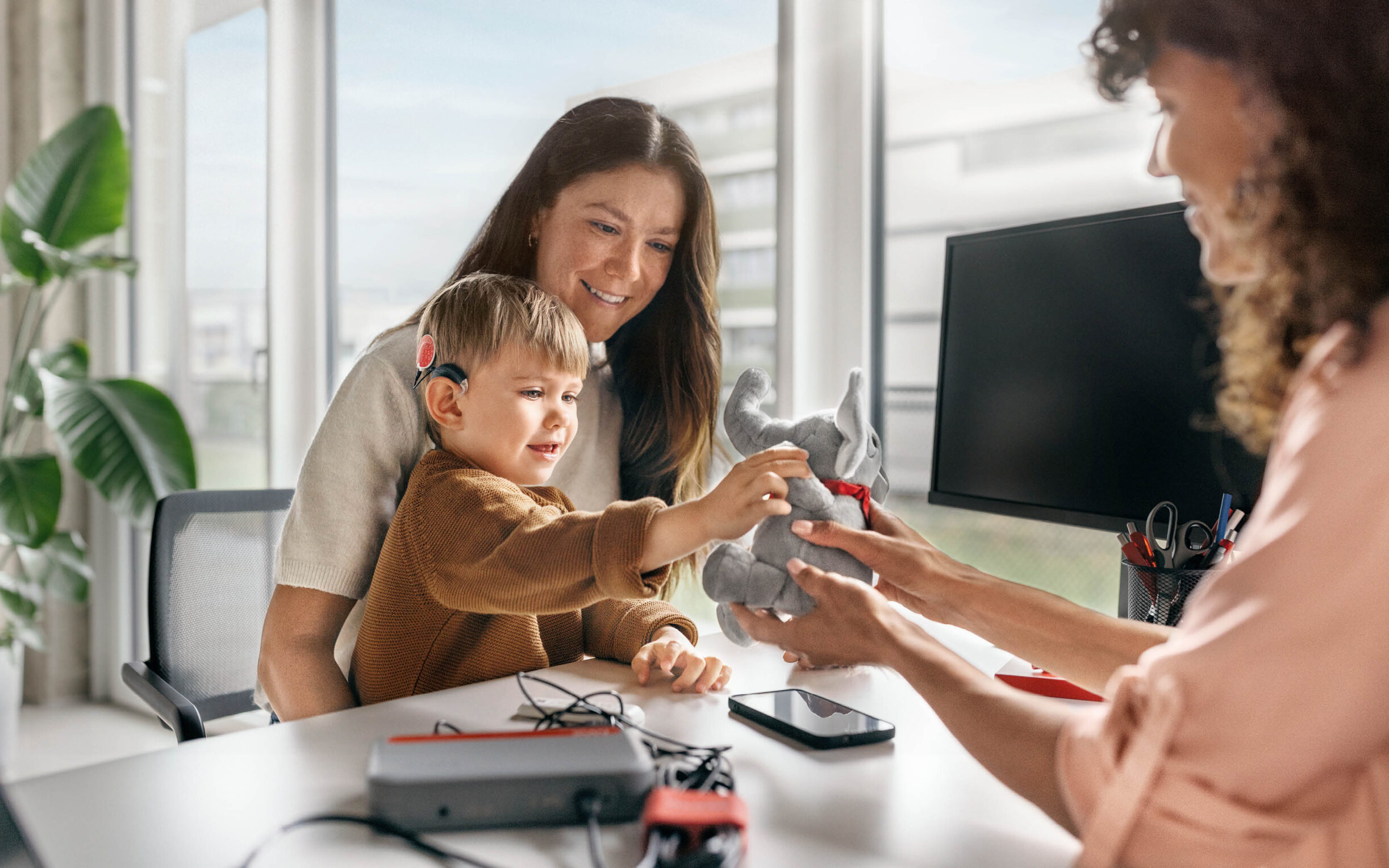
Toddlers learn new words every day. When hearing is reduced, language development often slows down.
The signs of hearing loss listed above may overlap with the signs listed below.
Common signs of hearing loss in 2-year-olds are:
By age 3, children usually form short sentences, and their speech gets easier for others to understand.
If you suspect your 3-year-old might have hearing loss, look for:

At this age, kids are learning clearer speech, early reading, and classroom listening skills, so hearing difficulties can manifest in new ways.
Look for these signs of hearing loss in 4 to 5-year-old children:
School-aged hearing loss can affect academic performance and social life.
Look for:
Hearing loss in children is diagnosed using safe and painless tests that check how well your child’s ears and hearing pathways respond to sound. Depending on their age, this may include measures like newborn screening tests (OAE or ABR) or age‑appropriate listening tests that help the audiologist understand what your child can hear.
If you ever notice signs such as delayed speech, unclear speech, or difficulty following instructions, it’s important to schedule a hearing evaluation early—timely diagnosis gives children the best chance to develop strong communication and learning skills.
Every child’s hearing journey is unique. After diagnosis, your medical team will first identify and treat any underlying causes whenever possible, such as middle ear fluid, infections or other reversible conditions. If hearing loss cannot be resolved medically, your audiology team will then guide you through the most appropriate hearing technology options.
Hearing aids are typically recommended for mild-to-moderate sensorineural hearing loss and, in some cases, for conductive and mixed hearing loss. They make sounds louder so children can access speech and environmental sounds.
Consistency is key: Children benefit most when hearing aids are worn during all waking hours and when settings are regularly adjusted as they grow.
When hearing aids cannot provide sufficient benefit to meet a child’s developmental needs—such as in cases of severe hearing loss, atresia, or other significant ear malformations—various hearing implant solutions may be considered. These devices bypass the damaged parts of the auditory system and directly stimulate the next functional structure.

Early and adequate auditory access is crucial for speech, language, and cognitive development, making timely evaluation and intervention especially important for children.
Choosing a hearing implant is a big step, and it’s normal to have questions about what life will look like afterward.
Hearing implant surgery is a routine, well-planned procedure. After a short healing period, the external audio processor will be switched on. This is when your child will begin to hear new sounds through the implant.
After activation, your child will have regular appointments with audiologists to fine-tune the device. They should also have regular rehabilitation sessions with therapists to help build listening and speech skills. You’re not on your own—there’s a whole team supporting your child.
Daily conversation, reading, singing, and playing are some of the best “home therapies.” Your involvement helps your child get the most from their hearing implant.
At MED-EL, our focus is on each person’s entire, lifelong hearing journey. We aim to help children grow into confident communicators with the help of technology, therapy, and ongoing support tailored to their needs.
Noticing the early signs of hearing loss in children can make a huge difference in their lives. If you see several of the signs described in this guide, a hearing test is the best next step. With today’s hearing technology, children with hearing loss can learn, grow, and communicate confidently. The earlier they get support, the better their hearing outcomes can be.
Connect with MED-EL to learn about hearing assessments and hearing solutions for children, including cochlear implants. Our specialists are happy to answer your questions and support you in making choices with confidence.
Contact UsReferences


Dr. Yi Ge
Dr. Yi Ge is a certified otolaryngologist. Since joining MED-EL in 2003, she has held various roles across clinical, regulatory, and medical affairs. Currently, Dr. Ge serves as the Senior Manager of Medical Affairs at MED-EL Innsbruck. Her work focuses on medical process assessment in support of product development and risk management. With deep knowledge of hearing implant systems and global regulatory requirements, Dr. Ge fosters patient-centered innovation in hearing healthcare.
MED-EL
Was this article helpful?
Thanks for your feedback.
Sign up for newsletter below for more.
Thanks for your feedback.
Please leave your message below.
Thanks for your message. We will reply as soon as possible.
Send us a message
Field is required
John Doe
Field is required
name@mail.com
Field is required
What do you think?
© MED-EL Medical Electronics. All rights reserved. The content on this website is for general informational purposes only and should not be taken as medical advice. Contact your doctor or hearing specialist to learn what type of hearing solution suits your specific needs. Not all products, features, or indications are approved in all countries.
Hareem imran
May 14, 2026
my daughter is herring problem
MED-EL
May 15, 2026
Hi there, thanks for reaching out. If you'd like to learn more about our hearing solutions and which option might be best suited for your child, we recommend getting in touch with your local MED-EL team directly via https://www.medel.com/contact-med-el Kind regards
Dr. Yi Ge
Dr. Yi Ge is a certified otolaryngologist. Since joining MED-EL in 2003, she has held various roles across clinical, regulatory, and medical affairs. Currently, Dr. Ge serves as the Senior Manager of Medical Affairs at MED-EL Innsbruck. Her work focuses on medical process assessment in support of product development and risk management. With deep knowledge of hearing implant systems and global regulatory requirements, Dr. Ge fosters patient-centered innovation in hearing healthcare.
MED-EL
Dr. Yi Ge
Dr. Yi Ge is a certified otolaryngologist. Since joining MED-EL in 2003, she has held various roles across clinical, regulatory, and medical affairs. Currently, Dr. Ge serves as the Senior Manager of Medical Affairs at MED-EL Innsbruck. Her work focuses on medical process assessment in support of product development and risk management. With deep knowledge of hearing implant systems and global regulatory requirements, Dr. Ge fosters patient-centered innovation in hearing healthcare.
MED-EL
Want to make sure you get all the latest articles from the MED-EL Blog? Subscribe now!
Registration was successful
We’re the world’s leading hearing implant company, on a mission to help people with hearing loss experience the joy of sound.
Find your local MED-EL team
© MED-EL Medical Electronics. All rights reserved. The content on this website is for general informational purposes only and should not be taken as medical advice. Contact your doctor or hearing specialist to learn what type of hearing solution suits your specific needs. Not all products, features, or indications are approved in all countries.


Conversation
1 Comment