And you can't even see it.
Discover TICI English

Dr. Yi Ge, MED-EL
Published Aug 24, 2026
Retrocochlear hearing loss affects structures beyond the cochlea, mainly the auditory nerve and promixal brainstem, but does not include higher central auditory pathways. In simple terms, sound may reach the inner ear normally, but the signal may not travel clearly from the ear to the brain. This is different from cochlear hearing loss, which starts inside the inner ear itself. Even though both are forms of sensorineural hearing loss, retrocochlear hearing loss involves the hearing nerve or neural pathways rather than the cochlea.

People with retrocochlear hearing loss may notice symptoms such as unilateral hearing loss, trouble understanding speech, tinnitus, dizziness, or balance problems. In some cases, sounds may seem loud enough, but words still sound unclear.
In this article, you’ll learn about retrocochlear pathologies, how retrocochlear hearing loss differs from cochlear hearing loss, common symptoms and causes, how doctors test for it, what an audiogram may show, and which treatment options may help.
Retrocochlear hearing loss occurs beyond the cochlea, usually in the hearing nerve or the pathways that carry sound to the brain. It can decrease the clarity of sound signals as they travel to the brain, which may lead to trouble understanding speech, tinnitus, dizziness, or balance problems.
The word “retrocochlear” simply means “behind the cochlea.” The cochlea is the hearing organ inside the inner ear. When a problem occurs after sound leaves the cochlea and travels toward the brain, it is described as retrocochlear.
Cochlear and retrocochlear hearing loss are not the same. The main difference is whether the problem starts in the inner ear or in the auditory pathways just beyond it.
| Question | Cochlear Hearing Loss | Retrocochlear Hearing Loss |
| Where is the problem? | In the inner ear | In the hearing nerve or auditory pathways just beyond the inner ear |
| How does it affect hearing? | The ear has trouble picking up sound clearly | Sound may reach the ear, but the signal does not travel clearly to the brain |
| Is speech hard to understand? | Yes, especially in noise | Yes, and often more than expected |
| Common signs | Muffled sounds, trouble hearing certain sounds, difficulty in noise | Unilateral hearing loss, poor speech understanding, tinnitus, dizziness, balance problems or facial numbness |
| What can cause it? | Damage to the inner ear | Problems affecting the hearing nerve or nearby brain pathways, such as tumors or neurological conditions |
| How is it checked? | Hearing tests | Hearing tests plus other tests to look at the hearing nerve and related structures |
| Is there one single treatment? | No, treatment depends on level of hearing loss | No, treatment depends on the cause of hearing loss |
Both can affect hearing, but retrocochlear problems often require closer medical evaluation to identify the underlying cause.
Retrocochlear hearing loss symptoms can vary depending on where the problem occurs and what is causing it. Some people notice only mild hearing changes at first, while others experience balance or speech understanding difficulties.
Symptoms of retrocochlear hearing loss may include:
One of the most important clues can be difficulty understanding speech, especially in background noise. Some people feel that conversations sound unclear rather than simply quiet.
Symptoms can vary depending on the cause, so not everyone will experience the same signs.
Retrocochlear hearing loss can have different causes and is not always caused by a tumor. Possible causes include growths such as a vestibular schwannoma, neurological conditions such as multiple sclerosis, and other problems affecting the hearing nerve or brain pathways.
Tumors
Various tumors can cause the problem. A vestibular schwannoma is a noncancerous growth that develops on the hearing and balance nerve. It is one of the best-known causes of retrocochlear hearing loss.
Multiple Sclerosis (MS)
Multiple sclerosis can affect how nerve signals travel through the nervous system, including along the hearing pathways.
Neurodegenerative disorders
Neurodegenerative and central nervous system disorders cause retrocochlear hearing loss by disrupting neural transmission along the auditory pathways in the brainstem or higher centers. Examples include auditory neuropathy spectrum disorder (ANSD), when the auditory nerve is affected, and, hereditary neuropathies, where sound detection may be preserved but signal processing is impaired.
Other Neurological or Vascular Conditions
In some cases, blood vessel problems, inflammation, or other neurological conditions may affect the auditory nerve or central auditory pathways.
Rare Causes
Trauma, infections, and other uncommon conditions may also result in retrocochlear hearing loss.
Diagnosing retrocochlear hearing loss usually involves several steps. One hearing test alone typically does not provide the full picture.
An audiologist may begin with standard hearing tests, including pure-tone testing and speech understanding tests. These tests help measure the degree and type of hearing loss.
If you are unsure whether to schedule an appointment, an online hearing test can provide an initial indication, but it cannot replace a professional assessment.
To find out whether you might have hearing loss, try our free online hearing test. It can provide you with a quick assessment of how well you can hear and understand in everyday life.
Take Online Hearing TestMeasuring speech understanding is especially important in diagnosing retrocochlear conditions. In such cases, a person’s speech understanding may be disproportionately poor relative to their hearing thresholds alone.
An ABR test measures how sound signals travel along the hearing nerve and brainstem. This test is a key diagnostic tool for discovering possible retrocochlear abnormalities.
An MRI may be recommended if doctors need to examine the hearing nerve or surrounding structures more closely.
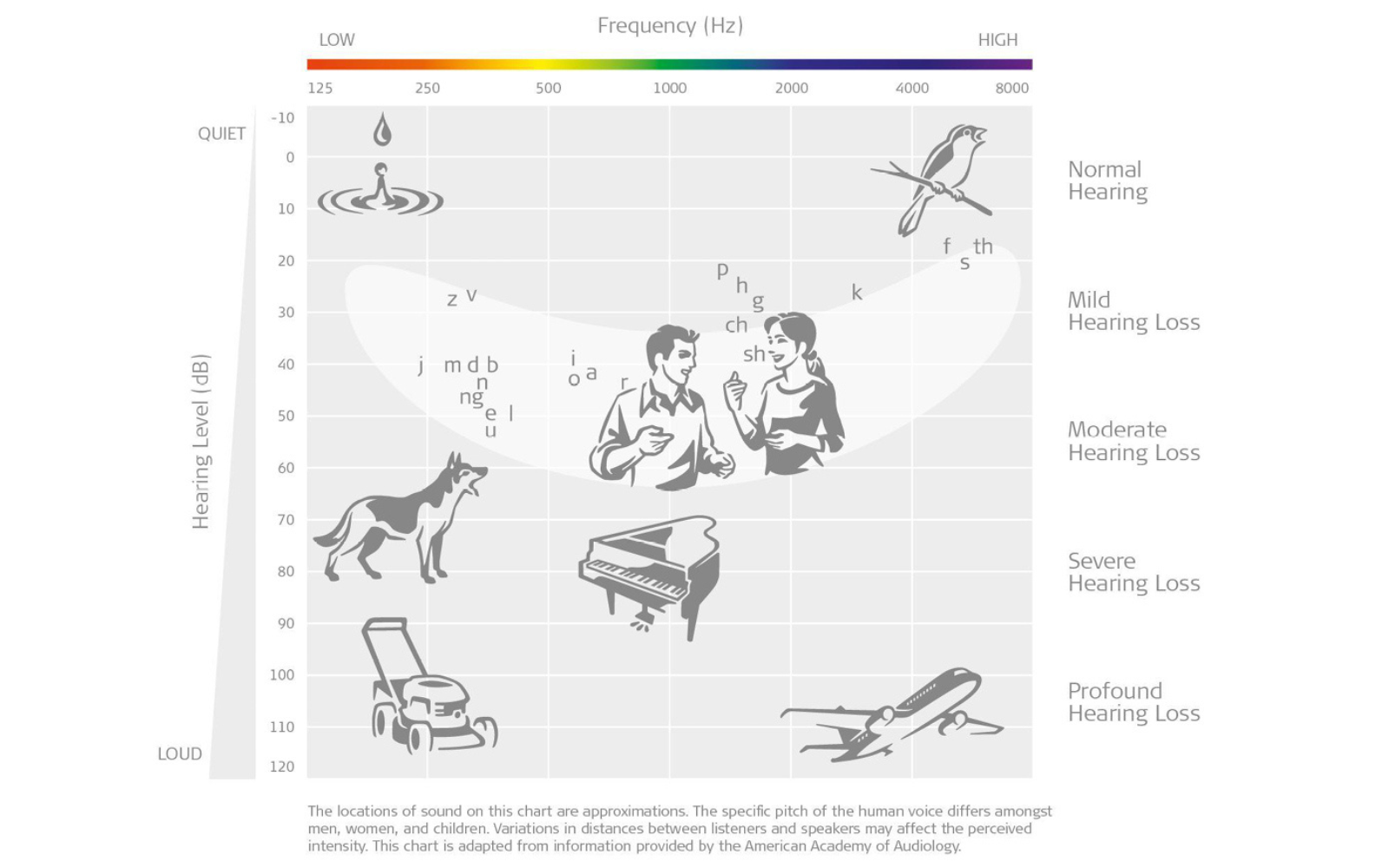
An audiogram can provide useful clues, but there is no single audiogram pattern that exclusively indicates a retrocochlear problem.
Sometimes asymmetric or unilateral hearing loss may raise concern. Poor speech understanding compared with hearing test results can also be an important clue. However, audiogram findings must always be interpreted together with other tests and medical evaluation.
Retrocochlear hearing loss treatment depends on the underlying cause. There is no one-size-fits-all approach.
Possible treatment options may include:
Some people may benefit from hearing aids, depending on their hearing levels and speech understanding abilities. Others may need additional medical care focused on the underlying condition.
In selected cases, implantable hearing solutions may become part of the conversation if hearing aids are not enough and the diagnosis supports such a solution. The best option depends on factors such as hearing levels, speech understanding, and auditory nerve function.
For some people with severe hearing loss, cochlear implants may be discussed as part of a broader hearing rehabilitation pathway. MED-EL hearing solutions may be considered within a comprehensive medical evaluation and care plan when clinically appropriate.

It is important to seek medical advice if you notice:
Sudden hearing changes should be evaluated as soon as possible. Early assessment can help identify the cause and decide on the correct steps to take next.
Audiologists, ENT specialists, neurotologists, and neurologists may all play a role in diagnosis and treatment.
Retrocochlear hearing loss affects hearing pathways beyond the inner ear, including the auditory nerve and proximal brain pathways involved in hearing. Symptoms may include unilateral or asymmetric hearing loss, disproportionately poor speech understanding, tinnitus, dizziness or balance problems and associated neurological signs such as facial numbness, weakness or other cranial nerve deficits.
Diagnosis usually involves several tests, including hearing tests, speech testing, ABR, and sometimes MRI scans. Treatment depends on the underlying cause and may include medical care, monitoring, hearing rehabilitation, or implant evaluation.
If you are concerned about symptoms or changes in hearing, speaking with a hearing specialist can help you better understand your options and the next steps you should take. MED-EL also offers additional educational resources about hearing health, hearing technology, and hearing rehabilitation.
If you have questions about the causes of hearing loss or treatment options, the MED-EL team is here to help.
Get In TouchReferences


Dr. Yi Ge
Dr. Yi Ge is a certified otolaryngologist. Since joining MED-EL in 2003, she has held various roles across clinical, regulatory, and medical affairs. Currently, Dr. Ge serves as the Senior Manager of Medical Affairs at MED-EL Innsbruck. Her work focuses on medical process assessment in support of product development and risk management. With deep knowledge of hearing implant systems and global regulatory requirements, Dr. Ge fosters patient-centered innovation in hearing healthcare.
MED-EL
Was this article helpful?
Thanks for your feedback.
Sign up for newsletter below for more.
Thanks for your feedback.
Please leave your message below.
Thanks for your message. We will reply as soon as possible.
Send us a message
Field is required
John Doe
Field is required
name@mail.com
Field is required
What do you think?
© MED-EL Medical Electronics. All rights reserved. The content on this website is for general informational purposes only and should not be taken as medical advice. Contact your doctor or hearing specialist to learn what type of hearing solution suits your specific needs. Not all products, features, or indications are approved in all countries.
Dr. Yi Ge
Dr. Yi Ge is a certified otolaryngologist. Since joining MED-EL in 2003, she has held various roles across clinical, regulatory, and medical affairs. Currently, Dr. Ge serves as the Senior Manager of Medical Affairs at MED-EL Innsbruck. Her work focuses on medical process assessment in support of product development and risk management. With deep knowledge of hearing implant systems and global regulatory requirements, Dr. Ge fosters patient-centered innovation in hearing healthcare.
MED-EL
Dr. Yi Ge
Dr. Yi Ge is a certified otolaryngologist. Since joining MED-EL in 2003, she has held various roles across clinical, regulatory, and medical affairs. Currently, Dr. Ge serves as the Senior Manager of Medical Affairs at MED-EL Innsbruck. Her work focuses on medical process assessment in support of product development and risk management. With deep knowledge of hearing implant systems and global regulatory requirements, Dr. Ge fosters patient-centered innovation in hearing healthcare.
MED-EL
Want to make sure you get all the latest articles from the MED-EL Blog? Subscribe now!
Registration was successful
We’re the world’s leading hearing implant company, on a mission to help people with hearing loss experience the joy of sound.
Find your local MED-EL team
© MED-EL Medical Electronics. All rights reserved. The content on this website is for general informational purposes only and should not be taken as medical advice. Contact your doctor or hearing specialist to learn what type of hearing solution suits your specific needs. Not all products, features, or indications are approved in all countries.