
And you can't even see it.
Discover TICI English

Dr. Yi Ge, MED-EL
Published Oct 06, 2026
Hearing loss can affect people in every part of the world and at every stage of life. In this article, we describe how prevalent hearing loss is on a global scale and across different world regions, with spotlights on Europe and the United States, as well as hearing loss statistics by age, common risk factors, and when it may be time to get your hearing tested.
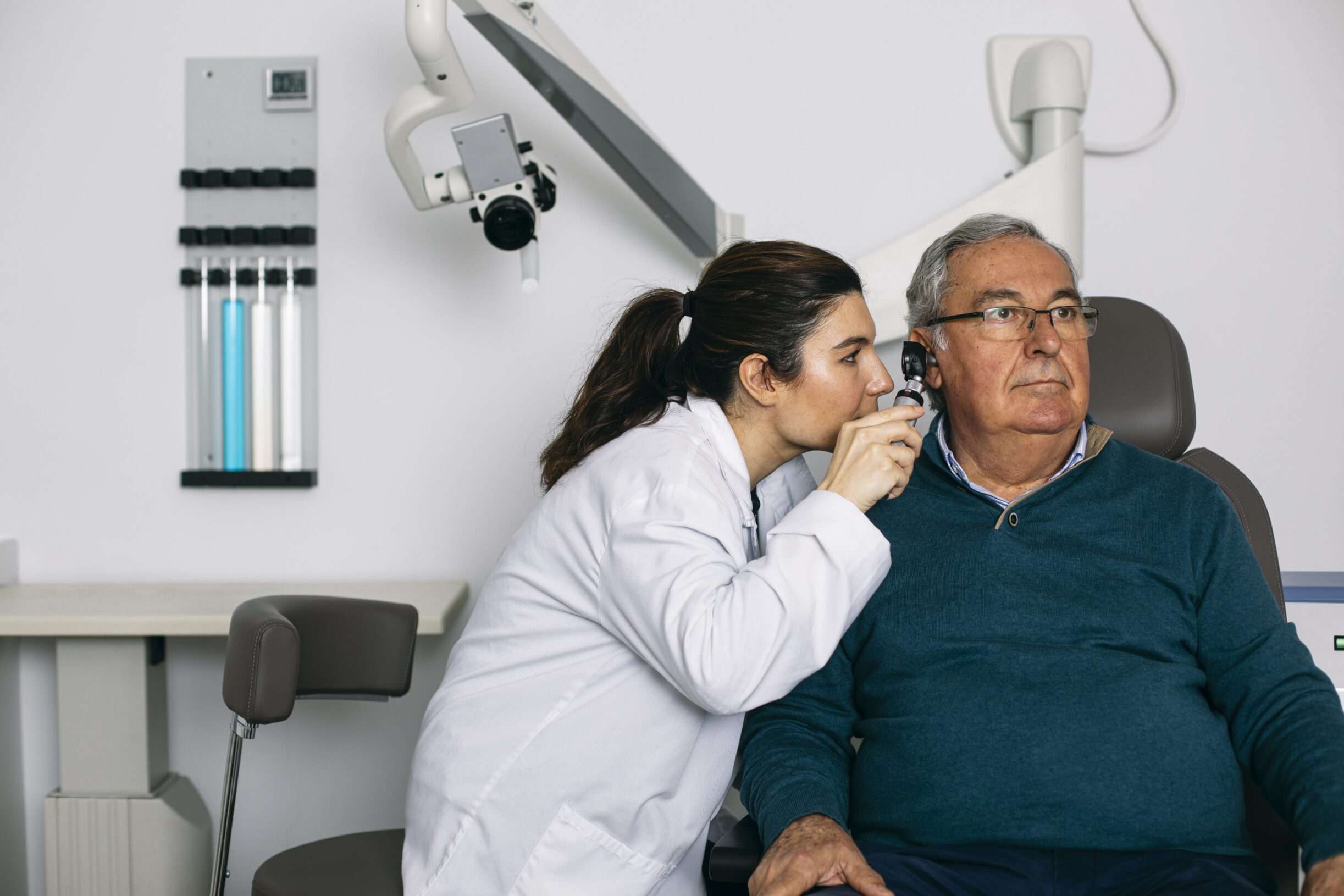
The World Health Organization (WHO) estimates that more than 1.5 billion people live with some degree of hearing loss. Around 430 million people—more than 5% of the world’s population—require rehabilitation for disabling hearing loss.
The global number is expected to rise as populations grow and age. By 2050, nearly 2.5 billion people are projected to have some degree of hearing loss, and more than 700 million—about 1 in 10—may require hearing rehabilitation.
The burden is not distributed evenly. Nearly 80% of people with disabling hearing loss live in low- and middle-income countries, where access to ear and hearing care may be limited.
Different studies may produce different prevalence figures because they use different hearing thresholds, age groups, testing methods, and definitions. Understanding what a number means is therefore just as important as the number itself.
| Global Hearing Loss Fact | Definition or Context |
| More than 1.5 billion people live with some degree of hearing loss. | The broadest global prevalence estimate. |
| Around 430 million people require rehabilitation for disabling hearing loss (hearing loss greater than 35 dB in the better hearing ear). | The number of people with disabling hearing loss. |
| More than 25% of people over age 60 have disabling hearing loss. | Hearing loss becomes more common with age. |
| Around 95.1 million children aged 5-19 live with hearing loss. | Hearing loss also affects children and adolescents. |
| Nearly 2.5 billion people may have some degree of hearing loss by 2050. | Projection based on population growth and aging. |
| More than 700 million people may require hearing rehabilitation by 2050. | Equivalent to about 1 in 10 people worldwide. |
Note: These WHO estimates are based on hearing loss in the better-hearing ear and therefore do not fully capture unilateral hearing loss, including single-sided deafness (SSD). As a result, the total number of people experiencing clinically significant hearing loss may be higher than these figures suggest.
Global totals can hide important regional differences. For a consistent comparison, the table below uses estimates from the WHO’s 2021 World Report on Hearing for hearing loss of moderate or higher grade across all six WHO regions. These regions are public-health groupings and do not follow every political or continental boundary[2].
| WHO Region | People With Moderate-or-Higher Hearing Loss | Regional Prevalence |
| Western Pacific Region | 136.5 million | 7.1% |
| European Region | 57.3 million | 6.2% |
| Region of the Americas | 62.7 million | 6.2% |
| South-East Asia Region | 109.4 million | 5.5% |
| African Region | 39.9 million | 3.6% |
| Eastern Mediterranean Region | 22.1 million | 3.1% |
In the European Region, 6.2% of the population, 57.3 million people, are estimated to experience moderate-or-higher hearing loss. If milder degrees of hearing loss are considered, the number is much higher: 190 million people—around 1 in 5 people in the region—are estimated to experience at least some form of hearing loss.
It is also important to keep in mind that the WHO European Region is broader than the European Union and includes 53 countries across Europe and Central Asia and should not be equated with the EU[3].
Questions about the number of people who are deaf do not have one universally applicable answer. Hearing loss and deafness are not interchangeable terms, and definitions can vary across clinical, social, cultural, and identity contexts.
Hearing loss can range from mild to profound and may affect one or both ears. The WHO explains that deaf people mostly experience profound hearing loss, which translates to very little or no hearing.
Population estimates can differ depending on the definition of hearing loss used, the age structure of the population, the availability of local data, and the methods used to produce the estimates. For example, WHO regional estimates draw on evidence from population-based hearing studies and other epidemiological data, which are combined using statistical modelling to estimate prevalence across countries and regions. This means that estimates may rely more heavily on modelling in places where direct population data are limited.
This is why there is no single percentage that can describe every person with hearing loss.
Hearing loss can affect people at any stage of life, but its prevalence generally increases with age. More than 25% of people over the age of 60 are affected by disabling hearing loss worldwide.
Around 95.1 million children aged 5-19 live with hearing loss worldwide. Some children are born with hearing loss, while others develop it later because of genetic factors, infections, chronic ear conditions, injuries, noise exposure, or other causes. Knowing the signs of hearing loss in children can help parents and caregivers recognize potential hearing difficulties and seek support when needed.
The WHO estimates that more than 1 billion young adults are at risk of permanent, avoidable hearing loss because of unsafe listening practices, including exposure to loud music and entertainment sound[1].
Age-related hearing loss, also called presbycusis, usually develops gradually. This is why many people may not immediately realize how much their hearing has changed.
Age is not the only factor. A person’s hearing can also be influenced by genetics, health conditions, medications, work environments, recreational noise, and access to preventative care and hearing services.
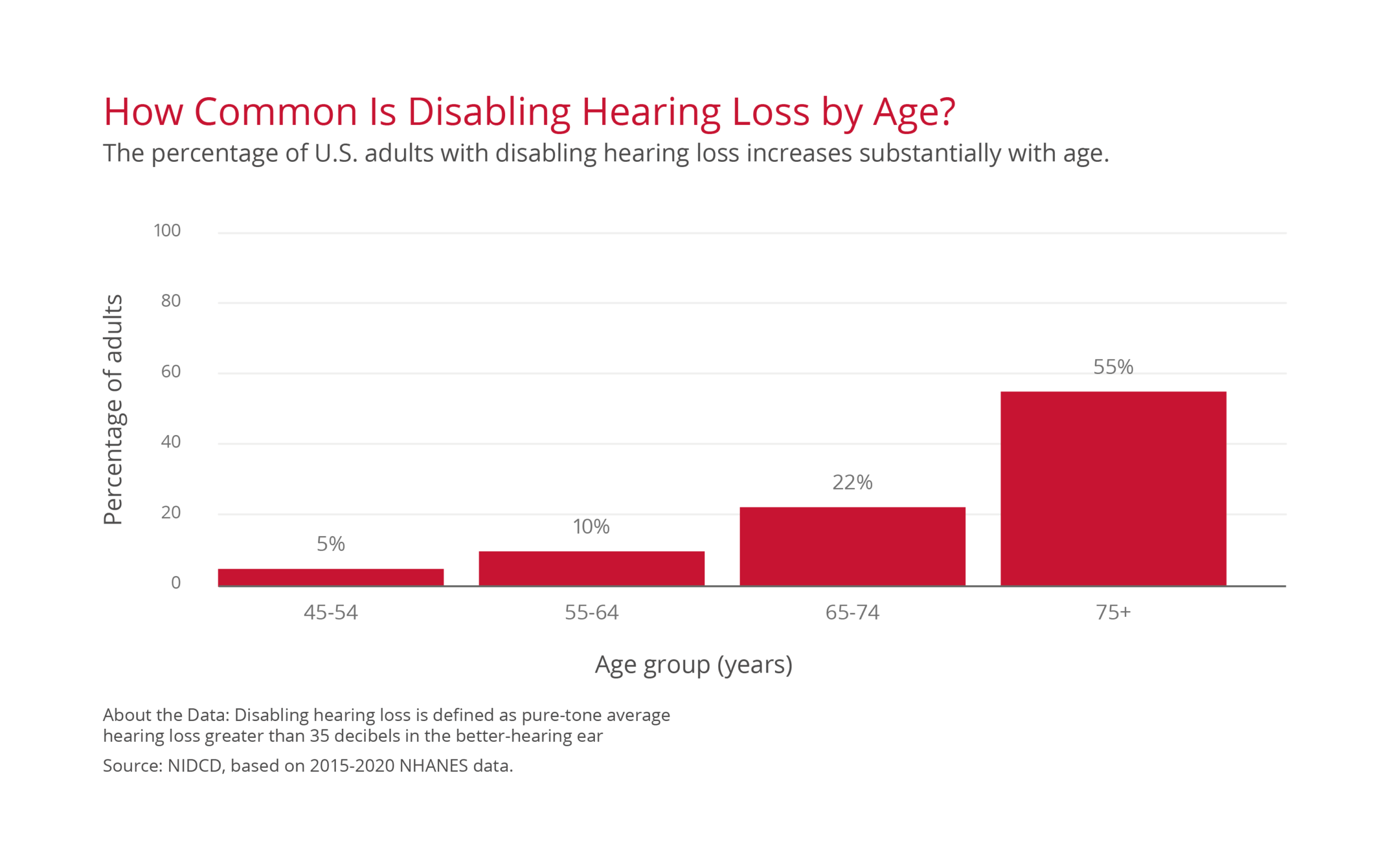
For the United States, the National Institute on Deafness and Other Communication Disorders (NIDCD) reports the following figures[4]:
| U.S. Statistic | Estimate | Data source |
| Children born with detectable hearing loss in one or both ears | About 2-3 per 1,000 | CDC (Centers for Disease Control and Prevention) early hearing detection and intervention program |
| People aged 12+ with hearing loss in both ears | Around 1 in 8 | NHANES (National Health and Nutrition Examination Survey), based on actual audiometric examination |
| Adults aged 18+ reporting some trouble hearing | About 15%, or 37.5 million | NHIS (National Health Interview Survey), based on self-reported survey |
| Adults who could benefit from hearing aids | About 28.8 million | NHANES data on hearing thresholds and HA candidacy criteria |
| Adults aged 70+ who could benefit from hearing aids and also made use of them | Fewer than 1 in 3 | NHANES analyses comparing measured HL with reported HA use |
The WHO and NIDCD numbers should not be compared directly as they use different measures and thresholds. Besides, some NIDCD statistics include also SSD and UHL, for example, the numbers related to “trouble hearing”.
There is no single cause for hearing loss. Different risk factors can affect hearing before birth, during childhood, and throughout adult life.
Changes in the inner ear can occur gradually as we get older. Age-related hearing loss often affects both ears and may make speech, especially speech in noise, more difficult to understand.
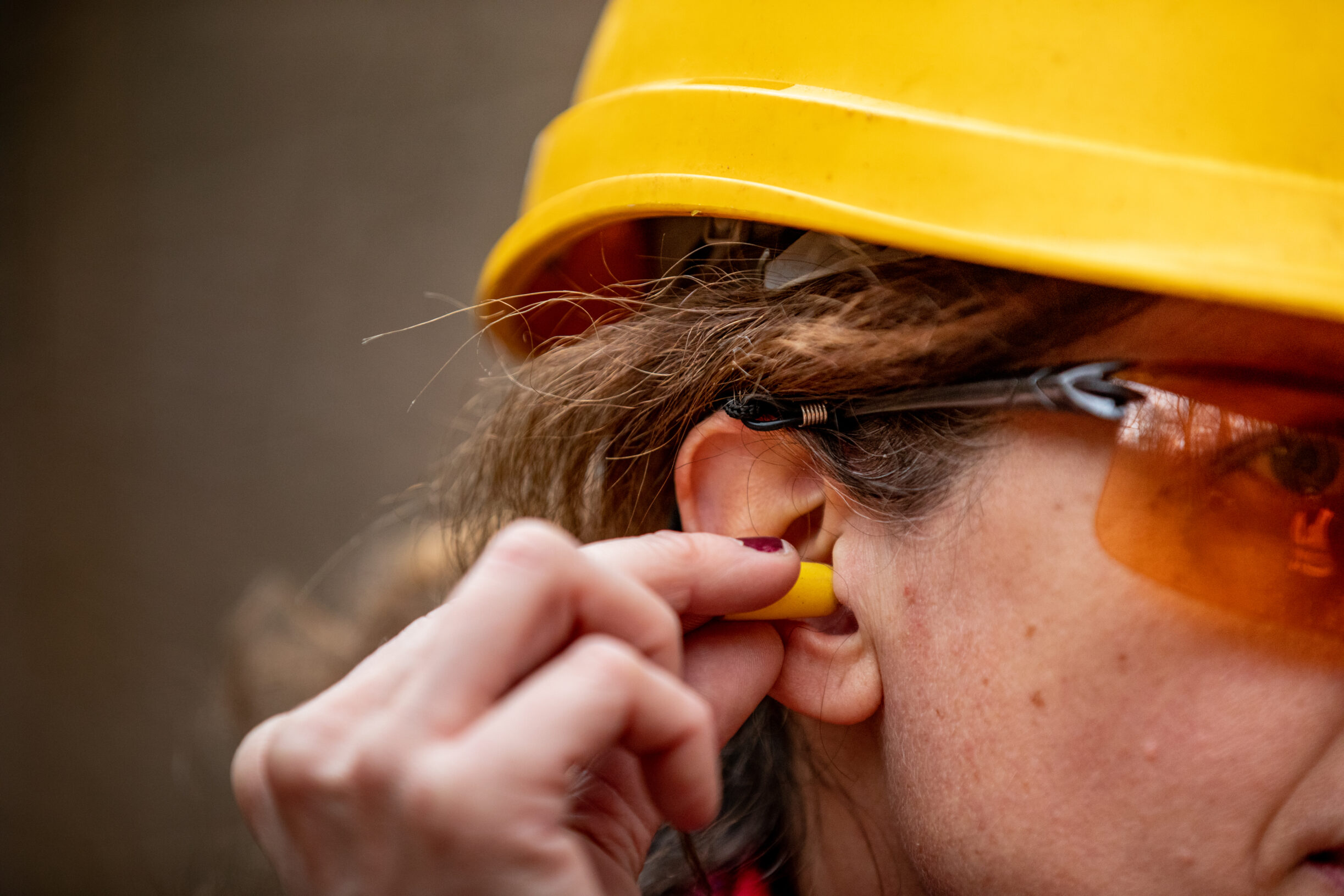
Repeated or intense exposure to loud noise can damage delicate structures in the inner ear, including sensory hair cells. Potential sources include loud workplaces, power tools, concerts and other entertainment venues, and personal audio devices used at unsafe volumes.
Protecting your ears around loud sounds, taking listening breaks, and following safe listening practices can help reduce the risk of noise-induced hearing loss.
Hearing loss can also be associated with genetic factors, sex, infections, chronic ear conditions, injuries, certain health conditions, smoking, trauma, and ototoxic medications that can damage hearing.
Because there are many possible causes and types of hearing loss, a professional hearing assessment is important if you notice any changes to your hearing.
Hearing loss statistics show that hearing difficulties are common, affect people in every region of the world, and that many individuals with hearing loss remain undiagnosed or untreated.
Unaddressed hearing loss can significantly affect communication, social participation, education, employment, and everyday quality of life. The WHO identifies it as a significant global public health issue and estimates that unaddressed hearing loss amounts to an annual global cost of almost US$ 1 trillion.
Statistics can provide useful context, yet they don’t address your individual hearing situation. The only way to reliably tell whether you experience hearing loss, and what type and degree, is to have your hearing assessed by a professional[1].
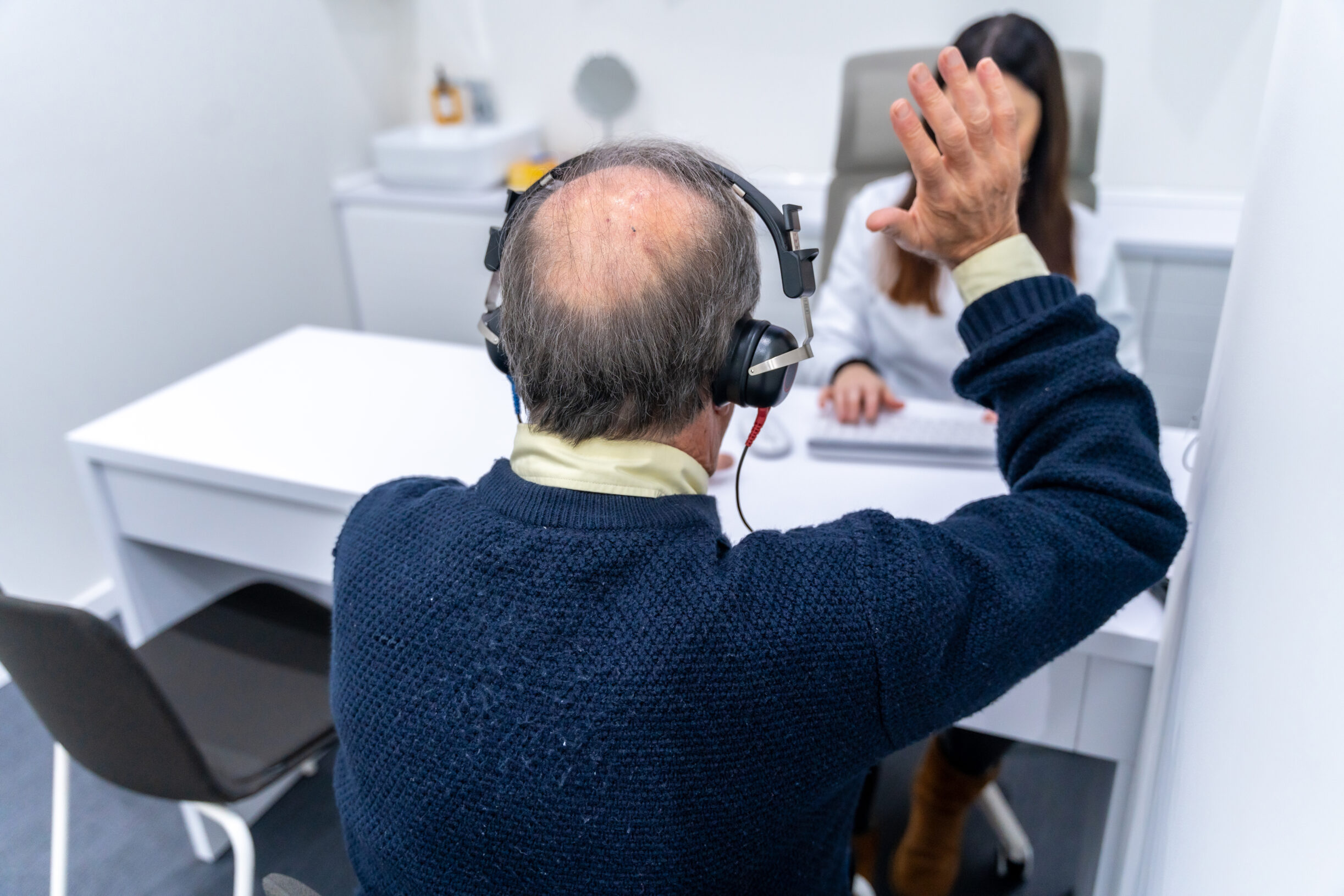
Consider getting your hearing tested if you notice that you:
A hearing screening can be a useful first step. And a more comprehensive hearing assessment can then help determine whether hearing loss is present and, if so, its type and degree.
To find out whether you might have hearing loss, try our free online hearing test. It can provide you with a quick assessment of how well you can hear and understand in everyday life.
Take Online Hearing TestDepending on the type and degree of hearing loss, hearing aids or other assistive technology can help. For those who experience severe-to-profound hearing loss, cochlear implants and other implantable hearing solutions can be discussed with a hearing care professional.

The right solution depends on your individual hearing, needs, and professional assessment.
Hearing loss is common worldwide and can affect people at every stage of life. Every region of the world is affected, although prevalence, population totals, and access to care differ. Because statistics use different definitions, assessment methods and reporting frameworks, it is important to keep in mind that not all figures can be compared directly to each other.
Despite advances in prevention and treatment, hearing loss remains substantially underdiagnosed and undertreated worldwide. For individuals, it‘s best to talk to your hearing professional as soon as possible if you experience any changes to your hearing.
Want to find out more about our hearing solutions? Your local MED-EL team is ready to answer your questions.
Get in TouchReferences


Dr. Yi Ge
Dr. Yi Ge is a certified otolaryngologist. Since joining MED-EL in 2003, she has held various roles across clinical, regulatory, and medical affairs. Currently, Dr. Ge serves as the Senior Manager of Medical Affairs at MED-EL Innsbruck. Her work focuses on medical process assessment in support of product development and risk management. With deep knowledge of hearing implant systems and global regulatory requirements, Dr. Ge fosters patient-centered innovation in hearing healthcare.
MED-EL
Was this article helpful?
Thanks for your feedback.
Sign up for newsletter below for more.
Thanks for your feedback.
Please leave your message below.
Thanks for your message. We will reply as soon as possible.
Send us a message
Field is required
John Doe
Field is required
name@mail.com
Field is required
What do you think?
© MED-EL Medical Electronics. All rights reserved. The content on this website is for general informational purposes only and should not be taken as medical advice. Contact your doctor or hearing specialist to learn what type of hearing solution suits your specific needs. Not all products, features, or indications are approved in all countries.
Dr. Yi Ge
Dr. Yi Ge is a certified otolaryngologist. Since joining MED-EL in 2003, she has held various roles across clinical, regulatory, and medical affairs. Currently, Dr. Ge serves as the Senior Manager of Medical Affairs at MED-EL Innsbruck. Her work focuses on medical process assessment in support of product development and risk management. With deep knowledge of hearing implant systems and global regulatory requirements, Dr. Ge fosters patient-centered innovation in hearing healthcare.
MED-EL
Dr. Yi Ge
Dr. Yi Ge is a certified otolaryngologist. Since joining MED-EL in 2003, she has held various roles across clinical, regulatory, and medical affairs. Currently, Dr. Ge serves as the Senior Manager of Medical Affairs at MED-EL Innsbruck. Her work focuses on medical process assessment in support of product development and risk management. With deep knowledge of hearing implant systems and global regulatory requirements, Dr. Ge fosters patient-centered innovation in hearing healthcare.
MED-EL
Want to make sure you get all the latest articles from the MED-EL Blog? Subscribe now!
Registration was successful
We’re the world’s leading hearing implant company, on a mission to help people with hearing loss experience the joy of sound.
Find your local MED-EL team
© MED-EL Medical Electronics. All rights reserved. The content on this website is for general informational purposes only and should not be taken as medical advice. Contact your doctor or hearing specialist to learn what type of hearing solution suits your specific needs. Not all products, features, or indications are approved in all countries.

Conversation
1 Comment