Hearing Health

Muffled Hearing in One Ear: Causes & When to Get Help

Muffled hearing in one ear can feel like your ear is blocked, clogged, or “underwater.” When it happens suddenly, it’s natural to worry. In many cases, this one-sided muffled hearing is caused by something temporary and treatable—such as earwax buildup, congestion, fluid, or pressure changes in the ear.

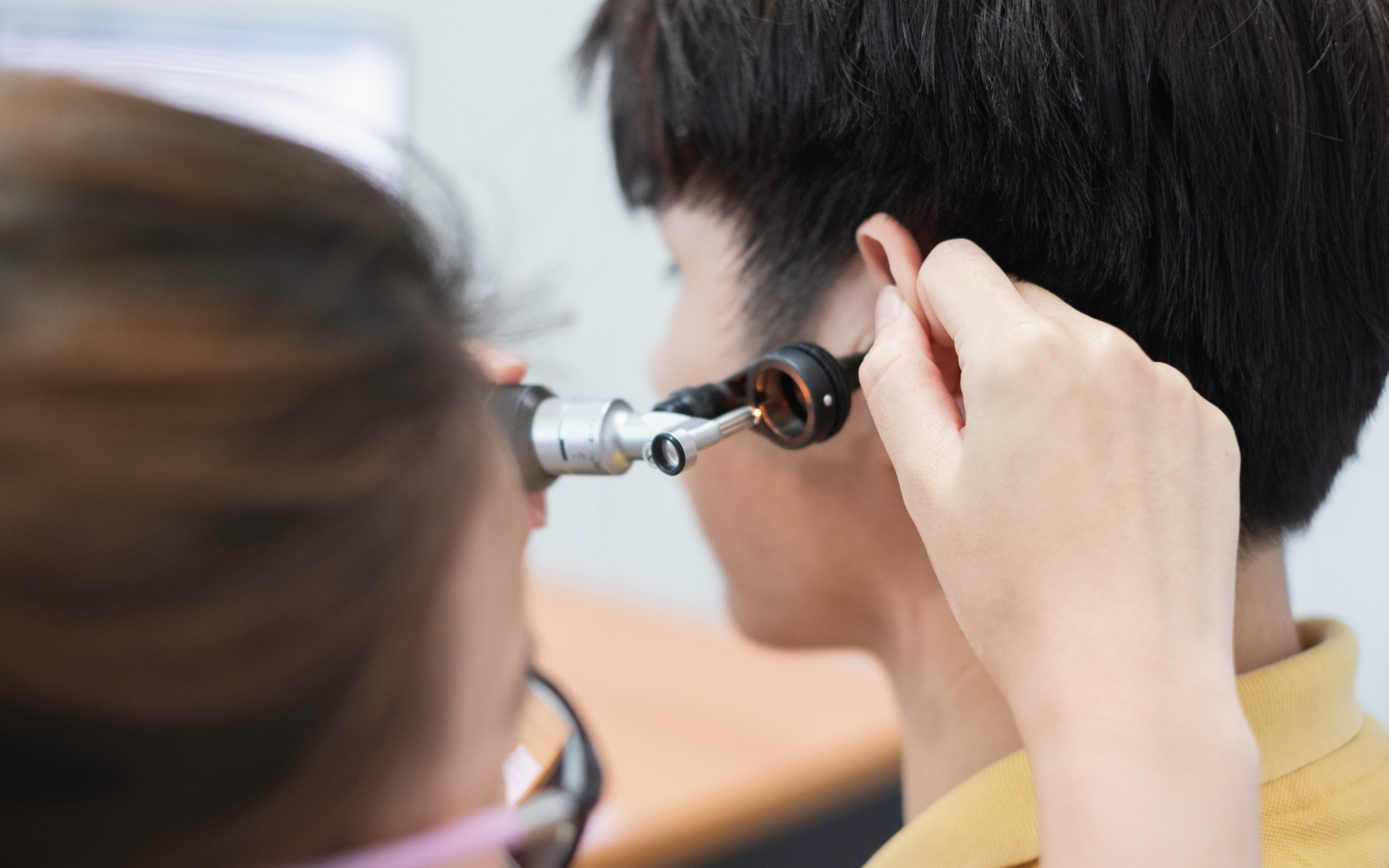
Young doctor talks with a patient who complains of earache during home visit.

Still, because only one ear is affected, it’s important not to ignore the symptom. One-sided hearing changes can sometimes be a clue that urgent medical evaluation is needed, especially if hearing drops suddenly or overnight. Knowing what’s likely harmless, what you can safely try at home, and when to seek medical care quickly can make a real difference.

Muffled Hearing in One Ear: What You Need to Know

  • Common causes include earwax buildup, congestion or fluid, pressure imbalance, and ear infections.
  • Mild symptoms often improve on their own or with gentle, safe measures.
  • Get urgent medical care if hearing loss is sudden or overnight or if you also have dizziness, severe pain, drainage, or new or worsening ringing in one ear.
  • Sudden sensorineural hearing loss can start as sudden muffled hearing in one ear and requires same‑day evaluation.

What Does It Mean If Hearing Is Muffled in One Ear?

Muffled hearing means sounds are less clear or quieter than usual. Many people describe it as a blocked, clogged, or underwater sensation. It often comes with a feeling of fullness or pressure in the ear.

There are two main ways this can happen:

  • Sound is physically blocked on its way into the ear. This is common with earwax, fluid, or pressure problems in the middle ear.
  • Sound is distorted inside the inner ear or hearing nerve. This is less common but more urgent, especially if it starts suddenly.

Most temporary causes involve sound being blocked in the outer or middle ear, while sudden inner-ear causes affect how sound is converted into signals for the brain.

When Is Muffled Hearing in One Ear an Emergency?

If muffled hearing in one ear starts suddenly or overnight, it shall be evaluated immediately to rule out sudden sensorineural hearing loss. Seek immediate ENT evaluation if muffled hearing in one ear is accompanied by any of the following symptoms:

  • Sudden hearing loss in one ear within minutes to 72 hours; some people report an alarming “pop” before hearing disappears
  • New or worsening ringing in one ear along with hearing loss
  • dizziness, vertigo, or balance problems accompanying the hearing change

Other symptoms that suggest alternative diagnoses but still require urgent same-day evaluation:

  • Severe ear drainage, especially pus or blood
  • Severe ear pain or fever
  • Facial weakness, numbness, severe headache, or other neurological symptoms
  • Hearing problems after a head injury or very loud noise exposure

Sudden Sensorineural Hearing Loss

Sudden sensorineural hearing loss is a rapid drop in hearing that can happen within minutes to 72 hours. It may feel like the hearing in one ear is suddenly muffled, and it is often accompanied by ringing in the ear or dizziness. This is a medical emergency—early evaluation and treatment can make a difference.

If you seek care, a clinician will usually examine your ear and may test your hearing, especially when symptoms are sudden or one‑sided.

What Are Common Causes of Muffled Hearing in One Ear?

There are many possible reasons hearing in one ear is muffled. The table below shows common causes of muffled hearing in one ear, typical clues, and when to seek medical care.

Common Causes at a Glance

Cause

Typical clues

What you can do safely

When to seek care

Earwax buildup Gradual muffled or blocked feeling, ear fullness, no pain Avoid cotton swabs; consider professional ear cleaning if symptoms persist If hearing doesn’t improve, pain develops, or you’ve had ear surgery
Congestion or fluid (cold/allergies) Muffled hearing with pressure, popping, recent cold or allergies Swallow or yawn to gently equalize pressure; manage congestion with standard cold / allergy care If symptoms last more than a few days or worsen
Eustachian tube dysfunction Ear pressure or popping, worse with altitude changes Swallow, chew gum, avoid forceful ear ”popping” If pressure or muffled hearing persists
Pressure changes (flying/diving) Sudden clogged feeling after flying or diving Swallow or yawn to gently equalize pressure If pain is severe, bleeding occurs, or hearing doesn’t return
Ear infection Pain, fever, drainage, increasing pressure Keep ear dry; avoid inserting objects such as cotton swabs If pain, fever, or drainage is present
Sudden sensorineural hearing loss (SSNHL) Sudden or overnight hearing loss, often with tinnitus or dizziness Seek urgent medical evaluation—do not wait Emergency or same-day medical care is recommended

Earwax Buildup (Cerumen Impaction)

Earwax protects the ear canal, but too much earwax can block sound. This often causes muffled hearing in one ear, fullness, and reduced clarity. Pain is usually absent. Cotton swabs can push wax deeper and should be avoided. Professional earwax removal may be recommended.

Congestion, Allergies, or Fluid Behind the Eardrum

After a cold, sinus infection, or allergy flare, fluid can collect behind the eardrum. Hearing may feel muffled and pressure may come and go throughout the day.

Pressure Changes from Flying or Diving

Rapid altitude changes can affect pressure in the middle ear. This can cause a sudden clogged sensation and temporary muffled hearing. Mild cases are usually resolved, but severe pain, bleeding, or ongoing hearing loss should be checked.

Other Less Common but Important Causes

Less common but important causes include inner‑ear conditions such as Ménière’s disease, eardrum perforation, benign nerve tumors, head trauma, and sudden sensorineural hearing loss. Sudden or persistent one‑sided symptoms should always be evaluated.

Sudden Muffled Hearing in One Ear: What to Do Right Now

If you notice muffled hearing in one ear, the safest next steps depend on how suddenly it started and whether other symptoms are present.

1. Check Recent Triggers

Ask yourself:

  • Have I had a recent cold or allergies?
  • Was I on a flight or diving?
  • Was I exposed to loud noise?
  • Did water get into my ear?

2. Screen for Warning Signs

Get urgent medical care if you have sudden hearing loss, dizziness, drainage, severe pain, or neurological symptoms.

3. Avoid Risky Home Remedies

Do not insert cotton swabs or objects into the ear. Avoid ear candling and aggressive flushing. These can worsen the problem.

4. Try Gentle Pressure Relief

If pressure is the likely cause, swallow, yawn, or chew gum. Avoid forceful ear clearing.

5. No Pain Does Not Always Mean No Problem

Muffled hearing in one ear with no pain is often linked to wax or congestion. However, if the change was sudden, worsens, or does not improve within 24 to 48 hours, get it checked.

Will My Hearing Go Back to Normal—And How Long Might It Take?

Often, yes. Hearing commonly returns when it has a temporary cause, such as wax, pressure imbalance, or congestion. Improvement may happen within hours or over a few days.

If hearing does not improve, worsens, or starts suddenly in one ear, you should seek medical treatment.

How Is Muffled Hearing Treated?

Only a medical professional can determine the exact cause of one-sided hearing changes after examining the ear and, if needed, testing hearing.

Treatment depends on whether the cause is blockage, pressure, fluid (conductive hearing loss), or related to the inner ear (sensorineural hearing loss).

  • Earwax is removed safely by a professional.
  • Infections or inflammation are treated under medical guidance.
  • Pressure or fluid issues are managed based on the underlying problem.
  • Sudden sensorineural hearing loss requires immediate evaluation, and steroids may be used when appropriate.

If hearing does not return and hearing loss is permanent, treatment options may be discussed after a professional diagnosis. These can include hearing aids, bone conduction solutions, or cochlear implants in specific cases.

Cochlear Implants
Cochlear Implants
Discover More
BONEBRIDGE
BONEBRIDGE
Discover More
ADHEAR
ADHEAR
Discover More

How to Avoid Muffled Hearing: Prevention and Self-Care Tips

Taking small steps to care for your ears can go a long way in preventing muffled hearing. Here’s what to do to avoid muffled hearing:

  • Do not put objects into your ears
  • Protect your hearing in loud environments
  • Manage allergies and congestion early
  • Let ears dry naturally after swimming

Conclusion

There are common causes of muffled hearing in one ear, and it is often a treatable issue. Still, sudden or one‑sided changes in hearing should never be ignored. If symptoms are sudden, severe, or don’t improve, getting medical advice sooner rather than later is the safest choice.

Solutions for Hearing Loss

MED-EL offers hearing solutions for all types of hearing loss. Your local MED-EL team can talk you through the options.

Get In Touch

References

MED-EL

Dr. Yi Ge

Dr. Yi Ge is a certified otolaryngologist. Since joining MED-EL in 2003, she has held various roles across clinical, regulatory, and medical affairs. Currently, Dr. Ge serves as the Senior Manager of Medical Affairs at MED-EL Innsbruck. Her work focuses on medical process assessment in support of product development and risk management. With deep knowledge of hearing implant systems and global regulatory requirements, Dr. Ge fosters patient-centered innovation in hearing healthcare.

Thanks for your message. We will reply as soon as possible.

Send us a message

Field is required

John Doe

Field is required

name@mail.com

Field is required

What do you think?

Send Message

© MED-EL Medical Electronics. All rights reserved. The content on this website is for general informational purposes only and should not be taken as medical advice. Contact your doctor or hearing specialist to learn what type of hearing solution suits your specific needs. Not all products, features, or indications are approved in all countries.

Processing Comment

Sorry. There was an error. Please try again.

Thanks for your feedback. Your comment will be published after approval.

Leave your comment

MED-EL

Dr. Yi Ge

Dr. Yi Ge is a certified otolaryngologist. Since joining MED-EL in 2003, she has held various roles across clinical, regulatory, and medical affairs. Currently, Dr. Ge serves as the Senior Manager of Medical Affairs at MED-EL Innsbruck. Her work focuses on medical process assessment in support of product development and risk management. With deep knowledge of hearing implant systems and global regulatory requirements, Dr. Ge fosters patient-centered innovation in hearing healthcare.

MED-EL

Dr. Yi Ge

Dr. Yi Ge is a certified otolaryngologist. Since joining MED-EL in 2003, she has held various roles across clinical, regulatory, and medical affairs. Currently, Dr. Ge serves as the Senior Manager of Medical Affairs at MED-EL Innsbruck. Her work focuses on medical process assessment in support of product development and risk management. With deep knowledge of hearing implant systems and global regulatory requirements, Dr. Ge fosters patient-centered innovation in hearing healthcare.