

MED-EL, Dr. Yi Ge
Published Mar 10, 2026
Hearing Loss Treatment: Options, Solutions, and What Really Helps
Hearing loss can feel overwhelming, especially when you’re unsure what your options are. The good news is that hearing loss can often be treated or effectively managed with today’s medical care, hearing aids, hearing implants, and communication support — depending on the types and causes of hearing loss. Read on to explore today’s treatment options and learn which approaches are used for different hearing needs.

The right hearing loss treatment depends on several factors, including the type, cause, and severity of hearing loss. Some forms of hearing loss are temporary and medically treatable, while others require long-term hearing solutions such as hearing aids. Implantable hearing solutions may be considered when hearing aids no longer provide sufficient benefit. What all successful treatments have in common is one essential first step: a professional diagnosis.
In this guide, we explore different hearing loss treatments and outline what really helps, from medical care to advanced hearing technology.
Quick Overview: Hearing Loss Treatment Options
- Medical/surgical treatment (infections, blockages, inflammation, certain types of ear malformation)
- Hearing aids (mild-to-severe hearing loss)
- Cochlear implants (severe-to-profound hearing loss, ski-slope hearing loss)
- Middle ear implants (moderate to severe hearing loss)
- Bone conduction systems (conductive one-sided hearing loss)
- Therapy & assistive devices (communication support)
How Hearing Loss Is Treated Today
Modern hearing loss treatment falls into five main categories:
- Medical/surgical treatment
- Hearing aids
- Implantable hearing solutions
- Assistive devices
- Therapy-based approaches
It focuses on two main goals:
- Treating the underlying cause, when possible, and
- managing permanent hearing loss to improve communication and quality of life
Most hearing loss treatments involve personalized combinations of medical care, hearing technology, therapy, and daily support tools. Because every person’s hearing is different, treatment plans are highly individualized and guided by hearing tests and specialist evaluations.
Treatment Based on the Type of Hearing Loss
Hearing loss treatment varies depending on whether the hearing loss is conductive, sensorineural, or mixed. Some types affect sound transmission in the outer or middle ear, while others involve damage to the inner ear or auditory nerve, and some affect both.
Understanding the type of hearing loss helps determine whether hearing can be restored, improved, or supported with long-term solutions.
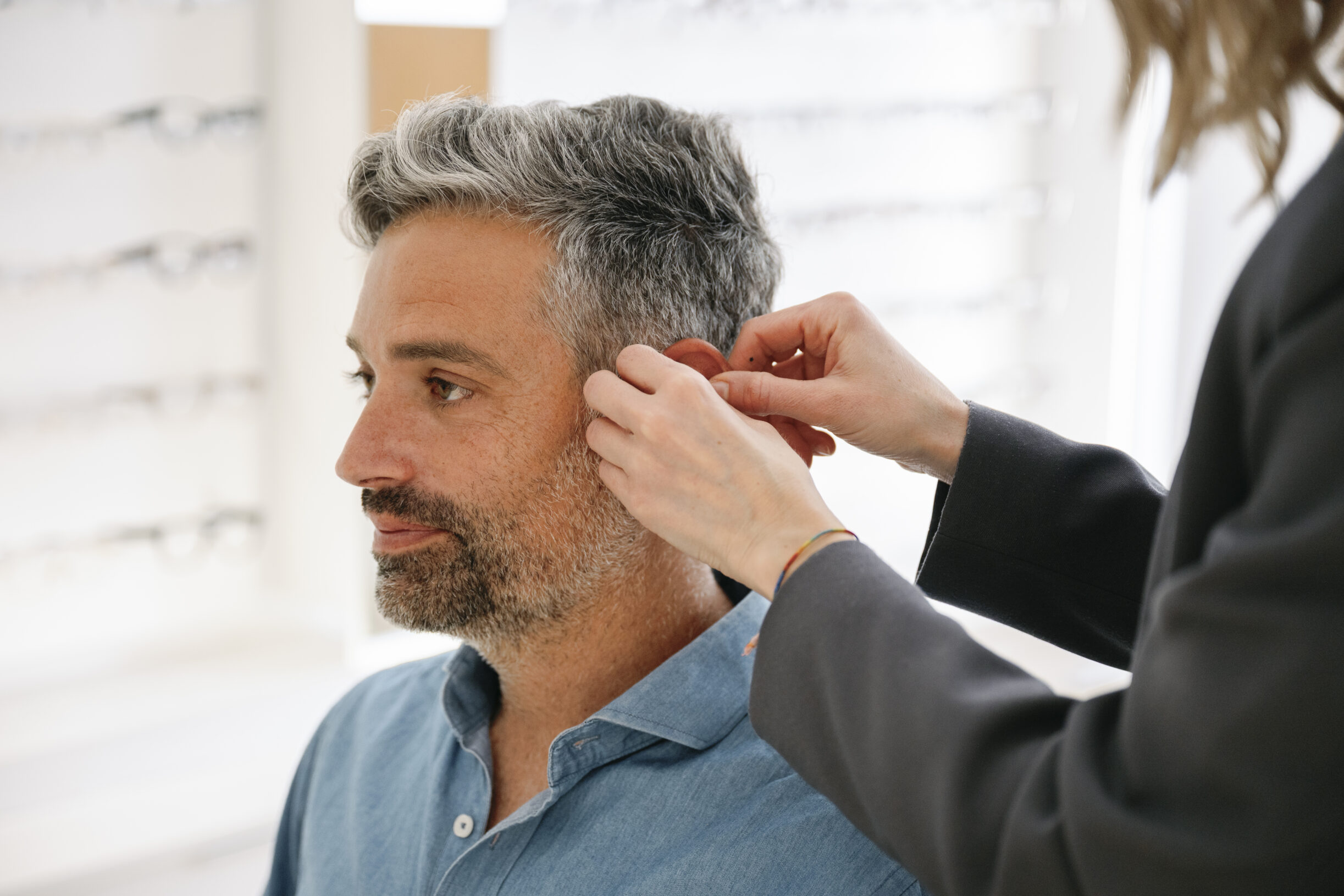
Treating Conductive Hearing Loss
Conductive hearing loss occurs when sound is blocked in the outer or middle ear. This type of hearing loss is often temporary and treatable.
Common conductive hearing loss treatments include:
- Professional earwax removal
- Medication for ear infections or inflammation
- Ear tubes (tympanostomy)
- Middle ear surgery or eardrum repair
Treatment often focuses on removing the blockage or correcting the underlying problem. In many cases, hearing may fully or partially return once the underlying issue is treated. Depending on the degree of blockage and the underlying disease, bone conduction hearing aids, bone conduction implants or middle ear implants can be used.
Treating Sensorineural Hearing Loss
Sensorineural hearing loss is caused by damage to the inner ear hair cells or auditory nerve. It is the most common type of hearing loss and can be permanent.
Treatment focuses mainly on management rather than a cure, by improving access to sound rather than restoring damaged hair cells.
Hearing technology plays a central role in sensorineural hearing loss treatment, helping people better understand speech and reducing the influence of background noise. Depending on the severity of hearing loss, hearing aids or various hearing implants can be used to restore hearing.
Treating Mixed Hearing Loss
Mixed hearing loss combines conductive and sensorineural components. Treatment often involves a combination of medical care and hearing technology.
Treatment plans may change over time as medical conditions are addressed and hearing needs evolve. Ongoing specialist care ensures the most effective hearing loss solutions at each stage.
Medical & Surgical Hearing Loss Treatments
Medical hearing loss treatment is appropriate when hearing loss is caused by infections, inflammation, or structural issues.
Medication & Non-Invasive Treatments
- Antibiotics for ear infections
- Corticosteroids for sudden hearing loss or inflammation
- Professional earwax removal
Surgical Treatment Options
- Ear tubes
- Eardrum repair
- Middle ear surgery
Medical and surgical treatments are only appropriate for specific causes of hearing loss and require evaluation by an ENT specialist.
Hearing Aids as a Hearing Loss Treatment
Hearing aids are one of the most common and effective hearing loss treatments worldwide. They are electronic devices that amplify and process sound, making speech clearer and easier to understand.
Hearing aids can help people with mild-to-severe hearing loss by:
- Improving speech clarity through amplification of soft and high frequency sounds
- Reducing listening effort
- Enhancing social interaction and quality of life
Professional fitting and fine-tuning are crucial to ensure hearing aids meet individual hearing needs.

Implantable Hearing Solutions for Severe Hearing Loss
Implantable hearing solutions may be considered when hearing aids no longer provide sufficient benefit, or when hearing aids cannot be used due to medical contraindications, anatomical limitations, chronic ear disease or other practical reasons.
Cochlear Implants
Cochlear implants bypass damaged inner ear structures and directly stimulate the auditory nerve fibers inside the cochlea.

Cochlear Implants
Discover More About Cochlear ImplantsBenefits include:
- Support for spoken language development in children
- Improved speech understanding
- Better access to environmental sounds
Bone Conduction Systems
Bone conduction implants and bone conduction hearing aids convert sound into vibrations that travel through the skull bone straight to the cochlea, allowing sound to bypass the outer and middle ear and improve hearing.
They are often recommended for:
- Conductive hearing loss
- Mild mixed hearing loss
- Single-sided deafness

BONEBRIDGE
Discover More About BONEBRIDGE
ADHEAR
Discover More About ADHEARAssistive Listening Devices & Everyday Hearing Support
In addition to primary hearing devices, assistive listening devices (ALDs) like AudioLink XT support daily communication and independence.
Examples of assistive listening solutions include:
- TV and phone amplifiers
- Captioning systems
- Vibrating alarms and alert devices
These hearing loss solutions are especially helpful in challenging listening environments.

Therapy & Communication-Based Treatments
Comprehensive deafness treatment may include therapies that strengthen communication skills, such as:
- Speech and language therapy
- Auditory training
- Lip-reading strategies
- Sign language as a communication option
These approaches complement hearing technology and support long-term success. Therapies help people make better use of their hearing and communication skills, regardless of the device they use.

Age-Specific Hearing Loss Treatment Approaches
Hearing loss treatment goals differ by age, communication needs, and stage of development.
Hearing Loss Treatment in Children
- Early diagnosis and early intervention is critical
- Hearing aids may be tried first
- Cochlear implants should be recommended timely if hearing aids can’t provide sufficient benefits
- Focus on speech and language development
Hearing Loss Treatment in Adults & Older Adults
- Supports workplace and social communication
- Reduces listening fatigue
- Protects cognitive health and independence
Diagnosis: The First Step Toward the Right Treatment
Hearing loss treatment should never begin without a professional diagnosis. Otoscope and Hearing tests performed by audiologists or ENT specialists identify the type and degree of hearing loss.
Self-diagnosis is not enough. Accurate testing ensures you get the most effective hearing loss solution for your needs.

Conclusion: Help Is Available at Every Stage
There is no one-size-fits-all hearing loss treatment, but there is help at every stage. From medical care and hearing aids to advanced implantable solutions and therapy, modern treatments offer real, life-changing benefits.
With the right diagnosis and treatment plan, most people with hearing loss can significantly improve communication and daily life.
If you suspect hearing loss, taking the first step toward a diagnosis can open the door to effective treatment and improved quality of life.
Solutions for Hearing Loss
Want to find out more about our hearing solutions? Your local MED-EL team is ready to guide you through our hearing loss solutions.
Get in TouchReferences


MED-EL
Dr. Yi Ge
Dr. Yi Ge is a certified otolaryngologist. Since joining MED-EL in 2003, she has held various roles across clinical, regulatory, and medical affairs. Currently, Dr. Ge serves as the Senior Manager of Medical Affairs at MED-EL Innsbruck. Her work focuses on medical process assessment in support of product development and risk management. With deep knowledge of hearing implant systems and global regulatory requirements, Dr. Ge fosters patient-centered innovation in hearing healthcare.



Was this article helpful?
Thanks for your feedback.
Sign up for newsletter below for more.
Thanks for your feedback.
Please leave your message below.
Thanks for your message. We will reply as soon as possible.
Send us a message
Field is required
John Doe
Field is required
name@mail.com
Field is required
What do you think?
© MED-EL Medical Electronics. All rights reserved. The content on this website is for general informational purposes only and should not be taken as medical advice. Contact your doctor or hearing specialist to learn what type of hearing solution suits your specific needs. Not all products, features, or indications are approved in all countries.
Dulce Mónica Fernandes
March 11, 2026
Gostaria de mais informações e quais as soluções, para apoio à audição de TV e telemóvel?
MED-EL
March 12, 2026
Hi there, thank you for reaching out. We recommend contacting your local MED-EL team directly for further assistance: https://www.medel.com/pt-br/contact-med-el Kind regards
MED-EL
Dr. Yi Ge
Dr. Yi Ge is a certified otolaryngologist. Since joining MED-EL in 2003, she has held various roles across clinical, regulatory, and medical affairs. Currently, Dr. Ge serves as the Senior Manager of Medical Affairs at MED-EL Innsbruck. Her work focuses on medical process assessment in support of product development and risk management. With deep knowledge of hearing implant systems and global regulatory requirements, Dr. Ge fosters patient-centered innovation in hearing healthcare.
MED-EL
Dr. Yi Ge
Dr. Yi Ge is a certified otolaryngologist. Since joining MED-EL in 2003, she has held various roles across clinical, regulatory, and medical affairs. Currently, Dr. Ge serves as the Senior Manager of Medical Affairs at MED-EL Innsbruck. Her work focuses on medical process assessment in support of product development and risk management. With deep knowledge of hearing implant systems and global regulatory requirements, Dr. Ge fosters patient-centered innovation in hearing healthcare.
Conversation
1 Comment