La mayor innovación en la historia de la audición.

Y ni siquiera se ve.

Descubra el TICI
Consejos y trucos

5 mejoras en el hogar para usuarios de implantes auditivos

Estás sentado a la mesa durante la cena, pero las voces se mezclan y cuesta comprender una conversación. Suena el timbre y no lo escuchas. Más tarde, tampoco percibes el sonido del temporizador de la cocina. Situaciones cotidianas como estas pueden generar frustración, pero realizar algunos ajustes simples en el hogar puede marcar una gran diferencia.

Para los usuarios de implantes auditivos, ciertos ambientes del hogar pueden dificultar la audición sin que nos demos cuenta. Los techos altos y los pisos de superficies duras pueden generar eco y resonar, lo que hace que entender el habla sea más difícil. Al mismo tiempo, sonidos importantes, como el temporizador de la cocina o una alarma de humo, pueden pasar desapercibidos si no se cuenta con la configuración adecuada.

Aquí te compartimos cinco formas sencillas de mejorar la comunicación, la comodidad y la seguridad en casa.

1. Envía el sonido directamente a tu audio procesador

Conecta directamente el procesador de audio a la TV, o dispositivos musicales de forma fácil con las opciones de conectividad MED-EL. AudioLink o AudioLink XT  funcionan como micrófonos remotos, facilitando la escucha de conversaciones en una cena numerosa o reuniones familiares.

Opciones de streaming para tu procesador de audio

¿Te gustaría saber más sobre estas opciones de trasmisión?

Conozca más

2. Minimize Echo for Clearer Conversations

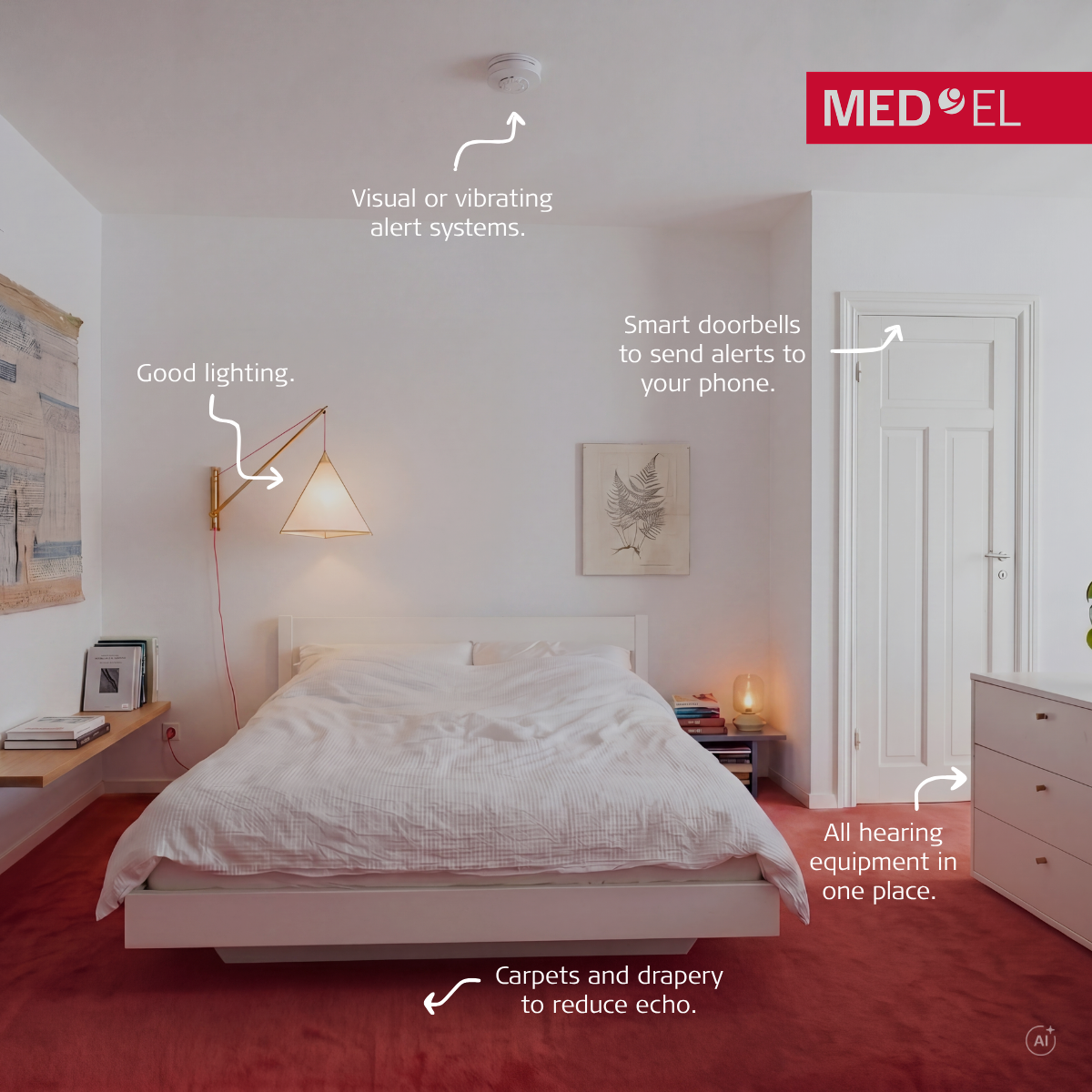
Use carpets, rugs, and drapery to reduce sound echoing throughout your home, making listening to conversations easier.

3. Ensure Good Lighting for Easier Communication

For people with hearing loss, lipreading often plays an integral role in communication. Good lighting helps you clearly see facial expressions and lip movements.

Make sure faces are evenly lit and not in shadow to make conversations easier to follow.

Two people with cochlear implants sitting in a restaurant and talking

4. Add Smart Alerts for Safety and Awareness

Install visual or vibrating assistive alert systems, such as smoke alarms in case of an emergency, or alarm clocks for everyday use. These systems don’t rely on hearing, which is critical when you are not wearing your audio processors.

A CI user sleeping with a vibrating watch

Also consider:

Smart doorbells can help you stay connected to visitors. They provide visual notifications and send alerts directly to your smartphone, so you won’t miss someone at the door—even in noisy environments.

5. Keep Your Equipment in One Place

Create a dedicated space specifically for keeping all of your hearing equipment to help you keep track of everything. Store backup equipment, your drying system, and battery chargers all in one place to stay organized and prepared.

Small changes can make a big difference in how you hear and communicate at home. By creating a more hearing-friendly environment, you can enjoy conversations more easily and feel more secure in your daily routine.

Referencias

Natalie Teakle

Natalie Teakle

Natalie Teakle is a Speech and Language Therapist and a Rehabilitation Manager at MED-EL. She provides training and mentoring support globally for professionals working in the field of hearing loss and hearing implants.

MED-EL

Gracias por tu mensaje. Responderemos lo antes posible.

Envíanos un mensaje

Campo obligatorio

John Doe

Campo obligatorio

name@mail.com

Campo obligatorio

What do you think?

Enviar mensaje

© MED-EL Medical Electronics. All rights reserved. The content on this website is for general informational purposes only and should not be taken as medical advice. Contact your doctor or hearing specialist to learn what type of hearing solution suits your specific needs. Not all products, features, or indications are approved in all countries.

Procesando comentario

Disculpa. Se ha producido un error. Por favor, inténtalo de nuevo.

Gracias por participar. Tu comentario se publicará una vez aprobado.

Déjanos tu comentario.

Natalie Teakle

Natalie Teakle

Natalie Teakle is a Speech and Language Therapist and a Rehabilitation Manager at MED-EL. She provides training and mentoring support globally for professionals working in the field of hearing loss and hearing implants.

MED-EL

Natalie Teakle

Natalie Teakle

Natalie Teakle is a Speech and Language Therapist and a Rehabilitation Manager at MED-EL. She provides training and mentoring support globally for professionals working in the field of hearing loss and hearing implants.

MED-EL